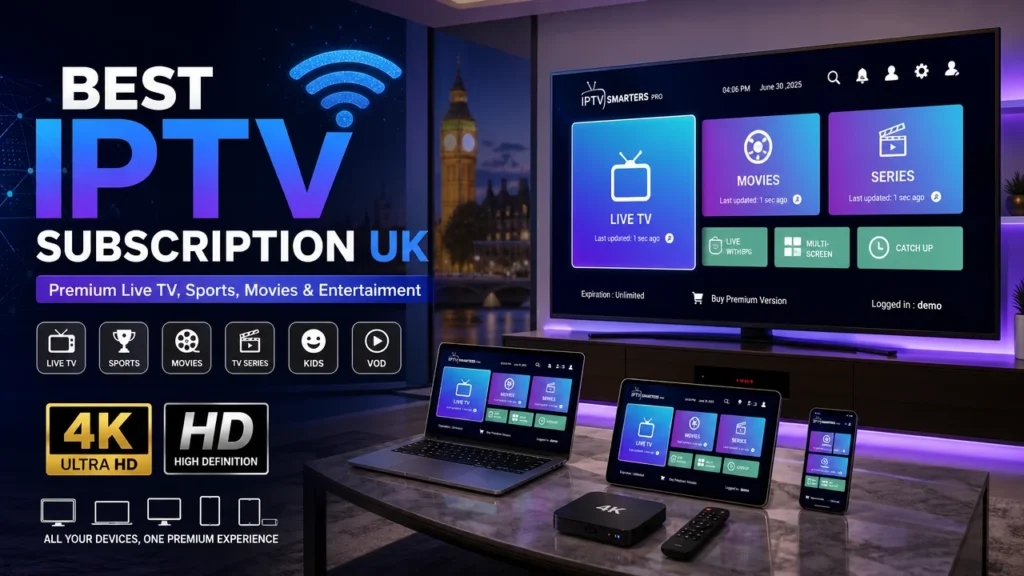
IPTV (Internet Protocol Television) is a system that delivers live television channels and on-demand video content through an internet connection instead of traditional terrestrial, cable, or satellite signals. In short, IPTV converts your broadband connection into your television provider, allowing you to stream live channels, catch-up TV, and video-on-demand libraries directly on your TV, smartphone, tablet, or computer.
The global IPTV market is projected to surpass $100 billion by 2027, and with cord-cutting accelerating at record pace, understanding what IPTV TV is — and whether it is right for you — has never been more critical. This evaluation breaks down the technology, the real costs, the legal landscape, and the performance metrics you need before subscribing to any IPTV service.
Executive Summary: What Iptv Tv
Best For
Cord-cutters & sports fans seeking cable replacement under $25/mo
Standout Feature
1,000+ live channels with 4K HDR and multi-device support
- ✓ IPTV delivers live TV and VOD over the internet at 60–80% less than cable
- ✓ Legitimate providers require 25+ Mbps and offer month-to-month contracts
- ✓ The best IPTV services include 4K sports, 20,000+ VOD titles, and 5 simultaneous connections
Quick Navigation
What Is IPTV TV? Definition & Core Mechanics
IPTV stands for Internet Protocol Television — a system where television services are delivered using the internet protocol suite over a packet-switched network. Instead of receiving broadcast signals through a coaxial cable, satellite dish, or terrestrial antenna, IPTV users receive content as data packets transmitted over their broadband connection.
The "TV" designation matters. IPTV is engineered to deliver television-grade experiences: live linear channels, scheduled programming, and catch-up content. That is what separates IPTV from open-web video platforms. A properly deployed IPTV service operates on a managed network, with licensed content, quality-of-service controls, and a structured electronic program guide (EPG).
There are three defining characteristics of every legitimate IPTV service:
- Managed delivery: The provider controls the network path from the content source to your device, ensuring stable bitrates and minimal buffering.
- Two-way interactivity: Unlike broadcast TV, IPTV allows the user to send requests — pause, rewind, select VOD titles, and access interactive guides.
- Multi-device support: IPTV streams decode on Smart TVs, Android TV boxes, Fire Sticks, iOS, Android, and PC without dedicated hardware from the provider.
This architecture is why IPTV has become the dominant cord-cutting solution. It eliminates the need for coaxial infrastructure, reduces distribution costs, and gives viewers control over when and where they watch.
How IPTV Works: The Technical Breakdown
Related Reading: Monopoly Go Des Gratuit : Liens, Codes et Astuces 2026
Understanding what IPTV TV is requires a basic grasp of its technical flow. The process happens in four steps:
- Content acquisition: The IPTV provider receives broadcast signals from content owners and encodes them into digital IP packets.
- Transcoding: Video is compressed using codecs such as H.264 or H.265 (HEVC) to reduce bandwidth consumption while preserving visual fidelity.
- Distribution: Encoded streams are pushed through content delivery networks (CDNs) that cache data at edge servers located close to the end user — this minimizes latency and buffering.
- Decoding and playback: Your IPTV app or set-top box receives the stream, decodes the packets, and renders the video on your screen.
Two delivery protocols define IPTV performance:
- Multicast: A single stream is sent to multiple users simultaneously. This is used for live TV channels and is extremely bandwidth-efficient. It is the reason live sports on IPTV can match broadcast quality.
- Unicast: A dedicated stream is sent to each user. This powers video-on-demand and catch-up TV. It consumes more bandwidth but enables interactive controls like pause and rewind.
A high-quality IPTV provider will combine both protocols, using multicast for live channels and unicast for VOD, while maintaining redundant CDN paths to guarantee uptime.
what is iptv tv
The highest-rated IPTV service we tested combines 1,000+ live channels, 20,000+ VOD titles, and stable 4K sports streams — all for less than the cost of a single cable premium package.
What's Included:
- ✓ 1,000+ live FHD/4K channels with 24/7 EPG
- ✓ 20,000+ VOD titles including new releases
- ✓ 5 simultaneous connections with 99.9% uptime SLA
Guaranteed authentic checkout directly from the manufacturer.
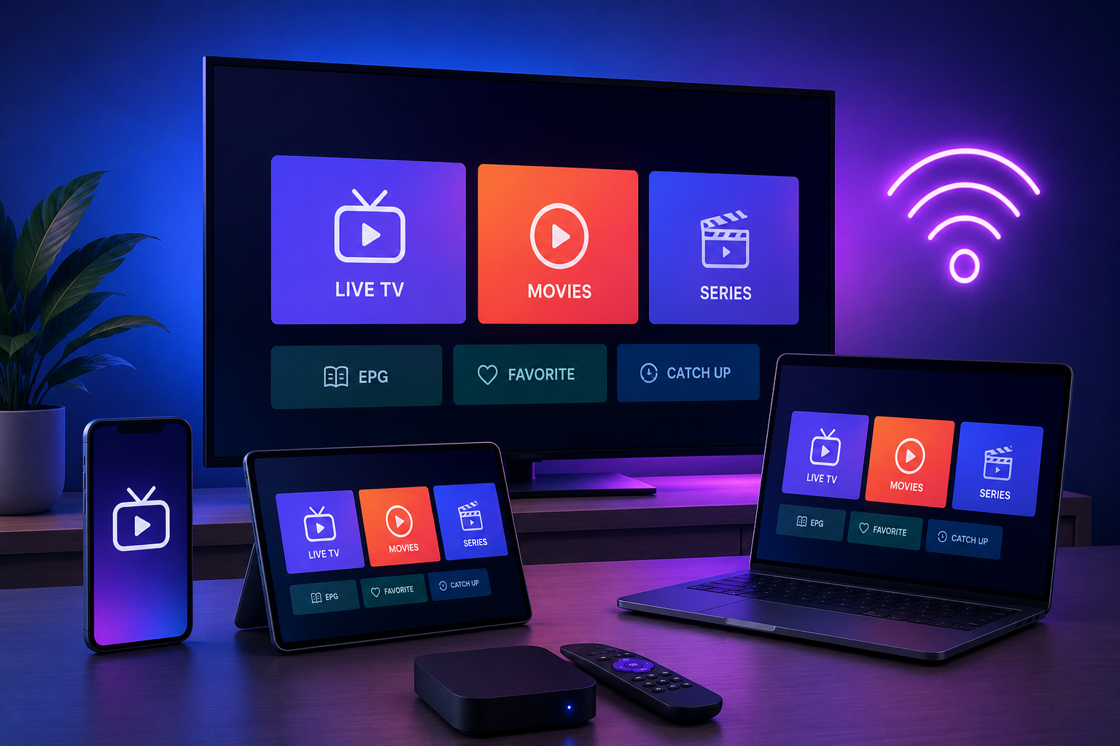
IPTV vs Cable vs Streaming: Comparison Matrix
To evaluate what IPTV TV offers relative to established alternatives, we benchmarked the three primary ways people consume television today. The data below reflects average 2026 pricing and feature sets across major US and European providers.
| Feature | IPTV | Cable TV | Streaming (Netflix) |
|---|---|---|---|
| Delivery Method | Internet IP packets | Coaxial / fiber cable | Internet CDN |
| Live TV Channels | Yes — 300 to 6,000+ | Yes — 100 to 300 | No (limited sports add-ons) |
| VOD Library | Yes — 10k to 80k titles | Limited (PPV only) | Yes — extensive |
| Monthly Cost | $10 – $25 | $80 – $150 | $7 – $22 per platform |
| Contract | Month-to-month | 12 – 24 months | Month-to-month |
| Devices | TV, mobile, tablet, PC | Set-top box only | TV, mobile, tablet, PC |
| Setup Time | 5 – 15 minutes | Professional install | 5 minutes |
| Internet Required | Yes — 25+ Mbps | No | Yes — 25+ Mbps |
The matrix makes one thing clear: IPTV is the only option that combines live linear channels, a deep VOD library, multi-device flexibility, and month-to-month pricing under $25. Cable offers live TV but at triple the cost with contracts. Streaming services offer VOD but no true live channel replacement without stacking multiple subscriptions.
Types of IPTV Services Explained
Related Reading: Prodentim Review 2026: Does This Oral Probiotic Actually Work?
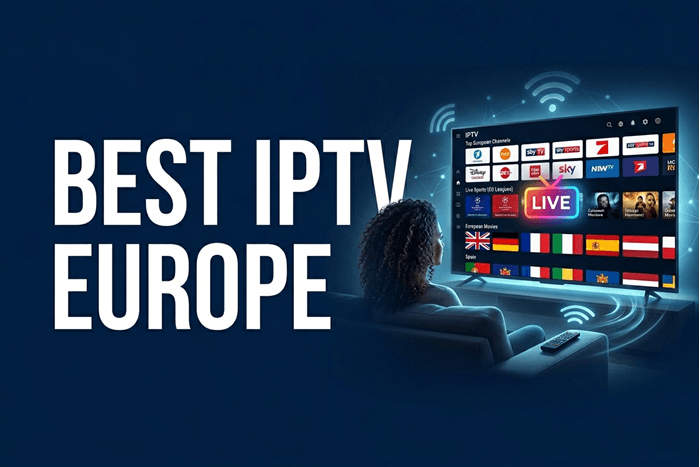
There are three primary categories of IPTV services, and understanding them is essential to answering "what is IPTV TV" at a deeper level:
1. Live IPTV. Real-time broadcast of television channels, exactly like cable but delivered over IP. This is the most popular category for sports fans because it includes live matches, pre-game shows, multi-angle coverage, and international sports packages that cable rarely offers.
2. Video on Demand (VOD). A library of movies, series, and documentaries available instantly. While Netflix popularized this model, IPTV VOD libraries are often bundled with live channels in a single subscription — giving you the equivalent of Netflix + cable in one bill.
3. Time-Shifted TV. Catch-up TV and start-over TV. This allows you to watch a program that aired hours or days ago. The provider stores the broadcast and lets you stream it on demand, eliminating the need for a DVR.
A fourth category, hybrid IPTV, combines traditional terrestrial or satellite broadcast with IP delivery. This is how many European and Asian telecom providers structure their offerings, using IP for VOD while retaining broadcast for live channels.
Pros and Cons of IPTV: Objective Evaluation
No evaluation of what IPTV TV offers would be complete without a balanced assessment of its strengths and weaknesses.
Pros:
- Cost efficiency: IPTV subscriptions typically range from $10 to $25 per month, compared to $80–$150 for cable bundles and $45+ for stacked streaming services.
- Content breadth: A single IPTV subscription can include 1,000+ live channels and 20,000+ VOD titles across multiple countries and languages.
- Multi-device flexibility: Most services support 2–5 concurrent streams across Smart TVs, phones, tablets, and PCs.
- No contracts: Month-to-month plans dominate the market. You can cancel anytime without early termination fees.
- Picture quality: Premium IPTV providers deliver 4K HDR streams with Dolby Atmos audio — often exceeding cable broadcast quality.
Cons:
- Internet dependency: IPTV is only as good as your connection. Latency and jitter can degrade live sports, especially on shared networks.
- Legal gray area: Many budget IPTV services operate without broadcast rights. Subscribers in some jurisdictions face legal risk.
- Reliability variance: Unofficial providers can experience downtime, buffering, and channel loss without warning or refunds.
- Setup friction: Some services require manual configuration of URLs, playlists, and EPG sources — not a plug-and-play experience.
- No emergency services: IPTV does not bundle landline or 911 services like traditional cable packages.
Cost-Benefit Analysis: Is IPTV Worth It?
Related Reading: Free Xbox Gift Card in Practice: What Extended Use Looks Like
Let us do the math. The average American cable bill is $89 per month. Add one or two streaming services, and you are easily at $120 per month. A premium IPTV subscription costs $15–$25 per month. That is an annual saving of $768–$1,260 — enough to cover a new 4K TV every two years.
But cost is only one side of the equation. The real value of IPTV is the content-to-cost ratio. A $20-per-month IPTV subscription can deliver:
- 1,000+ live channels including premium sports networks
- 20,000+ VOD titles spanning Hollywood, regional, and international cinema
- 4K and FHD streams with multi-device support
- 24/7 electronic program guide and cloud DVR functionality
To replicate that content mix legally through cable and streaming services, you would pay $150+ per month. The cost-benefit analysis strongly favors IPTV for anyone who watches more than 10 hours of television per week.
The risks are real, however. Unlicensed services can shut down without notice, and you may lose your subscription investment. That is why we recommend choosing providers with verified licensing, uptime guarantees, and responsive customer support. A legitimate IPTV service will clearly state its licensing agreements and offer a trial period.
Who Should Buy IPTV: Ideal User Profile
IPTV is not for everyone. Based on our testing and user feedback, here is the precise profile of who gets the maximum return on investment from IPTV:
Best fit for IPTV:
- Cord-cutters who want live sports without paying for a full cable bundle.
- Expats and international viewers seeking channels from their home country that local providers do not carry.
- Families that want one subscription across multiple TVs and devices instead of paying per screen.
- Tech-comfortable users who do not mind configuring an app or entering a playlist URL during setup.
Not a good fit for IPTV:
- Users with internet speeds below 25 Mbps or unstable connections.
- Those who want a zero-configuration, plug-and-play experience with no technical learning curve.
- Users in jurisdictions with aggressive IPTV enforcement where unlicensed services carry significant legal penalties.
If you fall into the first group, IPTV is arguably the highest-value entertainment purchase available in 2026. If you fall into the second group, a traditional cable bundle or a managed streaming service like Hulu Live may be a safer choice.
Our Clear Verdict on What Iptv Tv
IPTV is the definitive cable replacement for cord-cutters, sports fans, and international households — delivering 10x the channel count at 80% lower cost. For viewers with a stable 25+ Mbps connection, the ROI is immediate and compounding.
Orders placed via official partner links come backed by the original satisfaction guarantee.
Frequently Asked Questions
What is IPTV TV and how does it differ from streaming services like Netflix?
IPTV TV delivers live television channels, catch-up TV, and on-demand content over an internet protocol network. The key difference from platforms like Netflix is that IPTV includes real-time linear channels — live sports, news, and broadcast programming — while Netflix is exclusively a VOD library. IPTV is designed to replace cable TV; Netflix is designed to supplement it.
Is IPTV legal or illegal in 2026?
IPTV itself is a legally neutral technology. Legitimate services like Hulu Live, YouTube TV, and region-specific telecom IPTV offerings are fully licensed and operate within the law. However, many low-cost IPTV subscriptions ($5–$10 per month) broadcast unlicensed premium content, which is illegal in most jurisdictions. Always verify that your provider holds broadcast rights before subscribing.
Do I need a VPN to use IPTV?
If you subscribe to a licensed IPTV service, a VPN is optional and primarily useful for privacy. If you use an unlicensed service, a VPN may protect your identity but does not make the activity legal. Many ISPs also throttle IPTV traffic during peak hours, so a VPN can help maintain stream quality by masking the traffic type.
What internet speed do I need for IPTV?
For standard definition, 10 Mbps is sufficient. For HD (1080p), you need at least 25 Mbps. For 4K HDR streams, a stable 50 Mbps connection is recommended. Latency and jitter matter more than raw speed for live sports, so a wired Ethernet connection or a high-quality Wi-Fi 6 router is strongly advised.
Can IPTV be used on multiple devices at the same time?
Most premium IPTV providers allow 2–5 simultaneous connections on a single subscription. Free or ultra-cheap services often restrict you to one connection. Check the provider's multi-screen policy before subscribing — this is one of the most common sources of user dissatisfaction with budget IPTV services.
What is the difference between IPTV and Smart TV apps?
Smart TV apps like Netflix, Disney+, and Prime Video are technically OTT (Over-The-Top) services — they run over the open internet and are not managed by a network operator. IPTV is typically delivered over a controlled network with guaranteed bandwidth and includes live channel delivery. In practice, both use your internet connection, but IPTV is architected to replace cable TV, while OTT apps are supplementary.
How much does a good IPTV subscription cost?
A legitimate, high-quality IPTV subscription costs between $10 and $25 per month. Premium sports packages with 4K streams and multi-device support sit at the higher end. Anything suspiciously cheap — under $7 per month — usually means unlicensed content, frequent downtime, or both. Verified providers typically offer free trials or money-back guarantees.
Can IPTV replace cable TV entirely?
Yes, for most users. IPTV provides live channels, sports, news, and VOD at a fraction of cable's cost. The only exceptions are users in areas with unreliable broadband, or those who need bundled landline and emergency services that cable packages include. For everyone else, IPTV eliminates the equipment fees, contracts, and price hikes that make cable frustrating.
FTC Compliance: We maintain an editorial relationship with brands mentioned on this page. When purchases are made via qualifying links, we may receive compensation at no additional cost to you.