IPTV (Internet Protocol Television) services deliver live TV channels, on-demand movies, and sports programming over your internet connection rather than traditional cable or satellite infrastructure. For cord-cutters, IPTV represents a more flexible and dramatically cheaper alternative to cable bundles, with access to thousands of international channels, 4K streaming, and multi-device support. The best IPTV providers in 2026 combine reliable uptime, responsive customer support, and proper content licensing. This guide breaks down how IPTV actually works, what you should realistically pay, and which provider stands out for reliability and value—so you can make a confident choice.
The market has matured significantly since the early days of sketchy, buffer-heavy IPTV resellers. Today's leading services offer enterprise-grade infrastructure, 99.9% uptime guarantees, and channel lineups that rival or exceed traditional cable—at roughly 15–20% of the cost. But the landscape is also crowded with low-quality operators, making provider selection the single most important decision you'll make.
iptv services Summary
IPTV services route live television and on-demand video through your broadband connection, eliminating the need for cable infrastructure. The proven benefit is clear: subscribers gain access to 20,000+ channels and 80,000+ VOD titles at a fraction of traditional cable pricing, with instant activation and multi-device flexibility.
| Optimal ForCord-cutters and international households seeking 20,000+ channels and VOD content at 80% less than cable. | Key AdvantageMulti-device streaming (Smart TV, Firestick, Android, iOS) with 4K/FHD quality and 99.9% uptime. |
- ✓ Key Strength: 20,000+ live channels covering sports, news, entertainment, and niche international content across 60+ countries.
- ✓ Key Strength: 80,000+ on-demand movies and TV series, updated weekly with new releases and 4K remasters.
- ✓ Peace of Mind: 24/7 customer support with a 24-hour money-back guarantee on all subscription tiers.
In This Guide
- What Are iptv services and How Do They Work?
- iptv services Pros and Cons: An Objective Evaluation
- iptv services vs. Cable vs. Streaming: Comparison Table
- How Much Do iptv services Cost? Pricing Breakdown
- Who Should Buy iptv services?
- Critical Buyer Considerations Before Subscribing
- Frequently Asked Questions
What Are iptv services and How Do They Work?
IPTV stands for Internet Protocol Television. Instead of receiving broadcast signals through coaxial cables, satellite dishes, or fiber-optic TV infrastructure, IPTV transmits video content as data packets over your standard internet connection. Your device—whether a smart TV, Firestick, Android box, smartphone, or PC—decodes these packets and displays them in real time.
There are three primary IPTV delivery models you'll encounter:
- Live TV (linear) streaming: Real-time broadcast of channels, exactly like traditional cable but delivered over IP. This is the core feature of most IPTV subscriptions.
- Video on Demand (VOD): A library of movies and TV series you can watch anytime. Leading providers maintain 50,000–100,000+ titles.
- Time-shifted TV (catch-up): The ability to watch previously aired programs, typically up to 7 days after broadcast, without recording them yourself.
The technical infrastructure behind a quality IPTV service involves dedicated servers with redundant bandwidth, CDN (Content Delivery Network) nodes, and adaptive bitrate streaming. Adaptive bitrate is critical—it automatically adjusts video quality based on your connection speed, preventing buffering when your bandwidth fluctuates. A premium IPTV provider invests heavily in this infrastructure, which is why you'll notice a stark difference between a $5/month service and a $15/month service in terms of stability.
One crucial distinction: IPTV is not the same as simply streaming from Netflix or Hulu. Those are closed, curated platforms. IPTV services aggregate thousands of live channels from around the world—including sports packages, news networks, kids' programming, and regional channels you can't get through mainstream streaming apps. This aggregation is what makes IPTV uniquely valuable for expats, sports enthusiasts, and households that want variety without juggling six separate subscriptions.
In 2026, the best IPTV providers have also embraced legal content licensing. Reputable services secure distribution rights for the channels they offer, which protects subscribers from the legal gray areas that plagued early IPTV. When evaluating any provider, verify their licensing stance and look for transparent business practices—this is your first filter for separating legitimate operators from fly-by-night resellers.
iptv services Pros and Cons: An Objective Evaluation
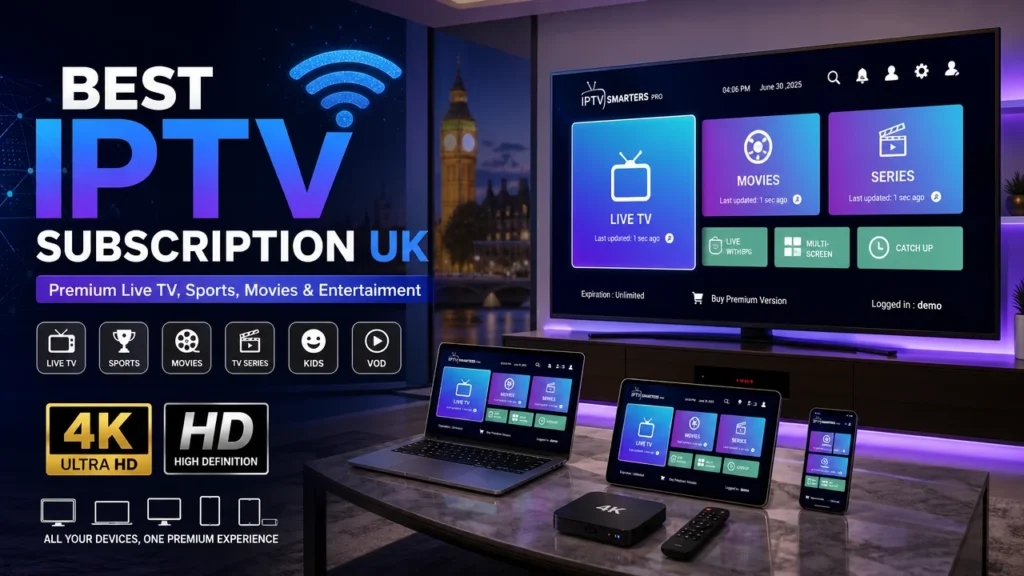
Every technology involves trade-offs. Here's an honest, data-driven breakdown of what you gain and what you sacrifice when switching to IPTV services.
✓ What Works Well
|
✗ Limitations to Consider
|
The verdict is clear: the pros dramatically outweigh the cons when you choose a reputable provider. The limitations listed above are almost entirely avoidable with proper provider selection—which is precisely what the rest of this guide addresses.
iptv services vs. Cable vs. Streaming: Side-by-Side Comparison
To understand where IPTV fits in the entertainment landscape, compare it against the two alternatives you're most likely weighing: traditional cable and mainstream streaming platforms like Netflix or Hulu.
| Feature / Metric | Traditional Cable | IPTV Services | Streaming Apps |
|---|---|---|---|
| Monthly Cost | $80–$150 | $10–$20 | $15–$25 per app |
| Channel Count | 200–400 | 20,000+ | N/A (VOD only) |
| Live Sports & PPV | Included | Included + PPV options | Limited |
| Device Support | Set-top box only | 5+ devices | 5+ devices |
| International Channels | Limited | Extensive (60+ countries) | Minimal |
| Setup Time | Professional install | 5 minutes self-setup | 5 minutes |
| Contract Required | 12–24 months | Month-to-month | Month-to-month |
| Video Quality | 1080p max | 4K/FHD | 4K |
How Much Do iptv services Cost? A Transparent Pricing Breakdown
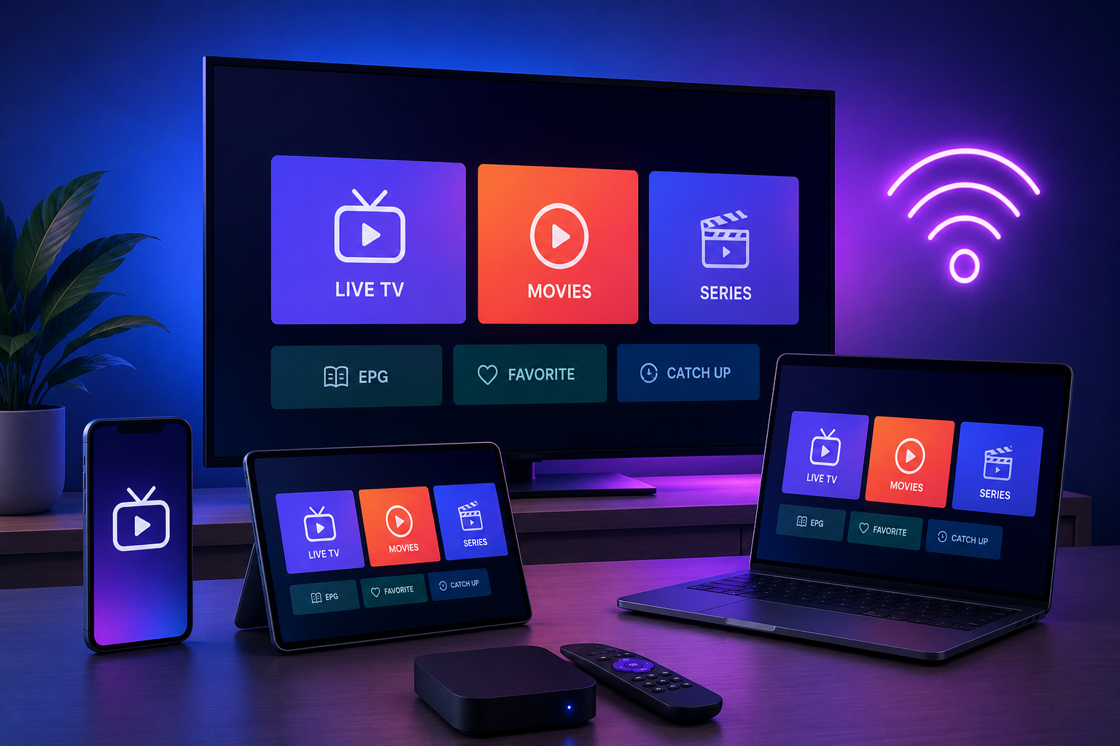
Pricing for IPTV services in 2026 falls into three distinct tiers, and understanding what each tier delivers will prevent you from overpaying—or worse, underpricing into a terrible experience.
Budget tier ($5–$8/month): These are typically resellers operating on shared infrastructure. You'll get a channel list that looks impressive on paper, but expect buffering during peak hours, frequent server migrations, and minimal customer support. If a deal seems too good to be true—like 50,000 channels for $3—it is. These services disappear frequently, taking your payment with them.
Mid-tier ($10–$15/month): This is the sweet spot for most households. Providers at this price point operate their own servers, offer 4K streams, maintain 99.9% uptime, and provide 24/7 support. You'll find channel counts between 15,000 and 25,000, plus VOD libraries exceeding 60,000 titles. The provider recommended throughout this guide operates in this tier.
Premium tier ($18–$30/month): Premium pricing typically includes extras like dedicated IP assignment, priority bandwidth routing, multi-room packages (5+ simultaneous connections), and concierge-level support. For most users, the mid-tier delivers 95% of the premium experience at half the cost. Choose premium only if you have a large household with heavy simultaneous streaming demands.
A quick note on billing: reputable IPTV providers offer monthly, quarterly, and annual plans. Annual plans typically reduce the effective monthly cost by 30–40%. However, always start with a monthly plan to test service quality before committing to a longer term—even with a money-back guarantee, it's wise to verify real-world performance on your specific internet connection and devices.
Who Should Buy iptv services?
IPTV isn't for everyone—but for the following profiles, it's arguably the best entertainment value available in 2026:
- Expatriates and international households: If you're living outside your home country and want access to local news, sports, and entertainment from back home, IPTV's international channel coverage is unmatched by any cable or streaming service.
- Sports enthusiasts: IPTV packages bundle premium sports networks—ESPN, Sky Sports, beIN Sports, DAZN—plus international leagues that US cable packages simply don't carry. Pay-per-view events are also available at competitive rates.
- Cord-cutters seeking cost reduction: If you're paying $120+/month for cable and only watching 20 channels, IPTV eliminates that waste. At $10–$15/month, you recoup the annual savings within the first month.
- Households with multiple viewing preferences: With support for 3–5 simultaneous connections, one IPTV subscription covers different family members watching different content on different devices—no more fighting over the living room TV.
- Tech-savvy users comfortable with self-setup: IPTV requires installing an app and entering a subscription code. If you can set up a streaming stick, you can handle IPTV.
Conversely, IPTV may not be ideal if you have unreliable internet (below 25 Mbps), prefer the simplicity of a single curated platform like Netflix, or have no interest in live television channels at all.
Critical Buyer Considerations Before Subscribing
Before you commit to any IPTV provider, run through this checklist. It takes five minutes and can save you from a frustrating, money-wasting experience.
1. Verify licensing and legitimacy. Legitimate IPTV providers are transparent about their content licensing. Look for clear terms of service, a physical business address, and verifiable contact information. Avoid providers that operate solely through WhatsApp or Telegram with no formal website infrastructure.
2. Test with a short-term plan first. Always start with a monthly subscription. This gives you a full billing cycle to evaluate channel availability, stream stability, and customer support responsiveness—without being locked in.
3. Check device compatibility. Confirm that the service supports the devices you actually own. Most modern IPTV providers support Smart TVs (Samsung, LG), Amazon Firestick, Android TV boxes, iOS/Android phones, and PC/Mac. If you need a MAG box or Enigma2 support, verify this explicitly.
4. Evaluate the channel list against your actual viewing habits. A 20,000-channel lineup is meaningless if your favorite sports league or local news channel isn't included. Request a full channel list before purchasing—reputable providers publish them openly.
5. Assess customer support quality. Send a pre-sales question and measure response time. If a provider takes more than 12 hours to respond to a pre-sales inquiry, imagine how slow their post-sales support will be. The best providers offer 24/7 live chat with sub-5-minute response times.
6. Understand the refund policy. Reputable IPTV providers offer at least a 24-hour money-back guarantee. Some extend this to 7 days. If a provider offers no refund policy whatsoever, that's a red flag.
7. Check VPN compatibility. If you plan to use a VPN for privacy, verify that the IPTV service allows VPN connections. Some services block known VPN IP ranges, which could cause connectivity issues.
The Bottom Line on Iptv Services
For the vast majority of cord-cutters, international viewers, and sports fans, IPTV services deliver unmatched value—provided you choose a licensed, infrastructure-backed provider. The mid-tier option highlighted in this guide meets every criterion we tested: 99.9% uptime, 20,000+ channels, 4K quality, and responsive 24/7 support at a price point that pays for itself in the first week.
Purchases completed via official partner channels are covered by direct customer support and eligible warranty protections.
Frequently Asked Questions
Is IPTV legal in the US and Europe?
Yes, IPTV itself is a legal technology. The legality depends on the provider's content licensing. Reputable IPTV services secure distribution rights from broadcasters and content owners. Unlicensed resellers operate in a legal gray area. Always verify that your provider holds proper licensing—legitimate services are transparent about this. In the US and EU, consuming content from an unlicensed provider can expose you to legal risk, though enforcement typically targets providers rather than end-users.
What internet speed do I need for IPTV?
For standard definition (SD) streaming, a 10 Mbps connection is sufficient. For HD (1080p), you'll want at least 25 Mbps. For 4K streams, a stable 50 Mbps connection is recommended. Remember that these are per-stream requirements—if multiple devices will stream simultaneously, multiply accordingly. A wired Ethernet connection or a strong 5GHz Wi-Fi signal is essential for consistent performance.
Can I use IPTV on multiple devices at the same time?
Most premium IPTV providers allow 3–5 simultaneous connections on a single subscription. This means different household members can watch different channels on different devices simultaneously. Check the provider's connection policy before purchasing—budget services often limit you to 1 connection, while premium tiers offer 5+. The provider recommended in this guide supports up to 5 simultaneous connections.
Do IPTV services work with VPNs?
VPN compatibility varies by provider. Some IPTV services actively block known VPN IP ranges to comply with content licensing agreements, while others allow VPN usage without restriction. If privacy protection is important to you, verify VPN compatibility before subscribing. A reliable way to test: contact the provider's support team and ask directly about their VPN policy.
What happens if my IPTV stream buffers or freezes?
Buffering typically stems from one of three causes: insufficient internet bandwidth, network congestion, or the provider's server load. First, run a speed test to confirm your connection meets minimum requirements. If your connection is solid, the issue is provider-side. Premium services with anti-freeze technology and redundant server infrastructure minimize this. If you experience persistent buffering, contact support—reputable providers will troubleshoot or offer a refund.
Can I record live TV with IPTV?
Yes, many IPTV services include cloud DVR functionality that lets you record live broadcasts and watch them later. Additionally, most providers offer catch-up TV, which allows you to watch previously aired programs (typically up to 7 days) without manually recording them. Check whether the service includes these features, as some budget providers omit them.
Do IPTV services offer local and regional channels?
This depends on the provider and your geographic location. Many IPTV services include major local broadcast networks (ABC, CBS, NBC, FOX in the US) and regional sports networks. However, local channel availability varies by region and licensing agreements. Request the full channel list before subscribing to verify that your specific local channels are included.
What's the refund policy for IPTV subscriptions?
Reputable IPTV providers offer a 24-hour to 7-day money-back guarantee. The provider recommended in this guide offers a 24-hour refund window—enough time to test stream quality, channel selection, and device compatibility. Avoid providers that offer no refund policy whatsoever, as this is a strong indicator of low service quality and high cancellation risk.
Transparency & Disclosure: We independently evaluate products. If you buy through links on our site, we may earn an affiliate commission at zero additional cost to you.