By Daniel R. · Updated 2026-08-19 · 11 min read
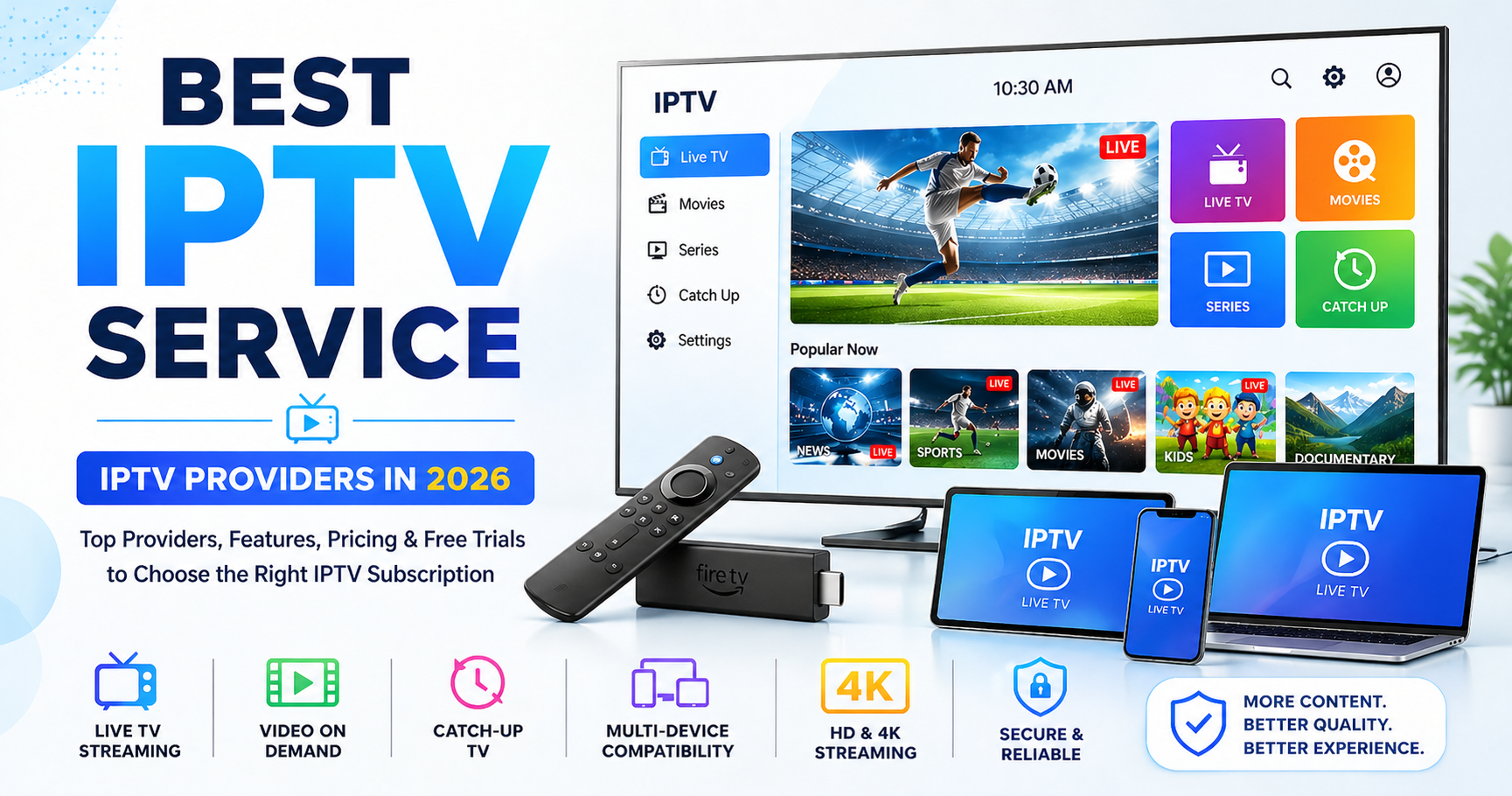
Most buyers do not fail with an iptv service because the technology is hard. They fail because they carry false assumptions into the purchase, then judge the wrong things after setup. The smart TV screen above may look ready to stream, but the real decision happens before an app ever loads.
Those assumptions shape how users choose a trial, test a Firestick, compare international channel lists, and decide between monthly and yearly billing. By the time buffering appears, many users have already bought for the wrong reasons. That is why myth-busting matters more than another raw channel count.
Below are five common beliefs compared with documented behavior, not marketing language. The goal is to explain what actually creates a stable streaming setup and what should make you walk away from a provider.
Why Misconceptions Damage Results
A wrong belief turns a minor technical issue into a reason to blame the wrong component. A user may replace three different apps when the real problem is a Wi-Fi dead zone. Or they may cancel a solid provider because a single international channel was removed, even though no service can guarantee every feed.
Misconceptions also make buyers overpay. Many users chase inflated channel numbers instead of checking whether the provider has working EPG data, catch-up TV, or support that responds. In public iptv service review reddit threads, the same pattern appears: users report issues, but the original complaint often started from an unrealistic expectation about buffering, legality, or device compatibility.
The fix is to look at how IPTV actually works. It is a delivery method, not a magic upgrade. Once that distinction is clear, choosing a reliable provider becomes less emotional and more evidence-based.
Myth 1: “All iptv service providers are illegal and unsafe”
The belief
Many users assume that any provider outside a cable or satellite company is automatically illegal. That belief leads them to avoid IPTV entirely, even though their own internet or mobile provider may already use IP-based television delivery.
The documented reality
IPTV is a technology, not a legal category. Licensed services exist in many countries and operate with proper broadcast agreements. The gray area comes from resellers that offer thousands of premium channels at a fraction of normal cost. Those services often lack documentation, stable support, and legal clarity.
If you want to know where to buy reliable iptv service, look for transparency first. A provider that explains its device requirements, offers a paid trial, and does not promise impossible channel counts is more credible than a seller pushing a lifetime deal through an anonymous message.
Myth 2: “A 2025 Firestick service will be buffering-free by default”
The belief
Users searching for the best iptv service for firestick 2025 often expect that a high-rated provider will eliminate buffering on its own. The search implies that the right subscription acts as a performance guarantee.
The documented reality
Buffering is a network and server condition, not a plan feature. Any provider can experience peak load, routing issues, or congestion on a shared server. Your home Wi-Fi, Firestick placement, ISP throttling, and the quality of your HDMI setup all matter more than a provider logo.
The honest search is not for best iptv service no buffering as an absolute. It is for a provider with enough server capacity, a responsive team, and support for your specific device. Even then, a wired Ethernet connection or a strong 5GHz Wi-Fi signal will often do more than switching subscriptions.
Myth 3: “Setting up iptv service on a smart TV is too technical”
The belief
Plenty of buyers hesitate because they assume IPTV requires router changes, advanced network commands, or a third-party box. That stops them from ever testing a service, even when their TV already supports the necessary apps.
The documented reality
For most modern smart TVs, setup takes a few minutes. You install an app, enter playlist credentials or a URL, and wait for the channel list to populate. The same applies to Firestick, Android TV, and many Samsung or LG sets. Here is a basic walkthrough for how to set up iptv service on smart tv:
- Open your TV’s app store and search for an IPTV player such as TiviMate, IPTV Smarters, or a provider-recommended app.
- Install the app and open it. It will ask for a playlist URL, an Xtream Code, or a username and password from your provider.
- Enter the details exactly as supplied. Typos are a common reason for an empty channel list.
- Let the app sync. If EPG data is available, enable it in the app settings.
- Test a live channel, then test catch-up or a video-on-demand title to confirm the full package works.
None of this requires command-line knowledge or a separate computer. The provider’s support team should give you the exact login format, and many services include a setup guide for Firestick, smart TVs, and Android boxes.
Myth 4: “More channels always means better value”
The belief
A provider advertising 20,000 channels looks more attractive than one offering 4,000. Buyers assume the larger number covers everything they could ever need, especially for sports or international programming.
The documented reality
High channel counts often include duplicates, broken feeds, adult-only categories, and low-resolution versions of the same station. That inflates the number without improving daily viewing. A curated iptv service for international channels can be far more useful than a 20,000-channel list with no EPG and no organization.
When comparing providers, ask for the channels you actually watch. A family that needs Italian news, UK entertainment, and NBA games may only require 200 working channels. The rest is noise unless the provider also maintains reliable catch-up TV and a clean Electronic Program Guide.
Myth 5: “Monthly subscriptions are always safer than yearly plans”
The belief
Many users avoid yearly billing because they fear being locked into a service that disappears. The logic is that monthly gives an easy exit. That belief drives the search for iptv service monthly subscription vs yearly comparisons.
The documented reality
A monthly plan is useful for testing a new provider, but it is not automatically safer. Some sellers use monthly plans to charge more for the same unreliable server, while yearly plans from a transparent provider can offer a better value. The risk is not the billing term; it is the provider itself.
A reasonable approach is to use a monthly or short trial first, then extend only after you have tested live TV during peak hours, confirmed EPG data, and contacted support. That protects your money without making you overpay forever for the fear of a yearly plan.
What Actually Works Based on Evidence
The patterns that matter are consistent across public complaints, support guides, and provider documentation. Here is what separates a usable setup from a frustrating one:
- Test during peak hours. A provider may look fine at 10 a.m. but crumble at 8 p.m. when shared servers fill up.
- Check EPG and catch-up. A list without a working program guide is hard to use daily. Some services advertise thousands of channels but skip EPG entirely.
- Ask about device compatibility. If you plan to use a Firestick, make sure the provider supports your version and gives clear login instructions.
- Look for support response time. A live chat or ticket response within a few hours is a stronger signal than a flashy channel count.
- Use a real payment method you can trace. Avoid sellers that only accept cryptocurrency or gift cards with no customer record.
The safest path to where to buy reliable iptv service is not a single brand name. It is a checklist: paid trial, clear setup documentation, realistic channel claims, responsive support, and billing flexibility. That combination beats any “best” list made from anonymous reviews.
✓ Benefits & Pros
Can deliver a large mix of live channels, sports, and iptv service for international channels at a lower monthly cost than traditional cable.
Many providers offer catch-up TV and video-on-demand, making an affordable iptv service with catch up tv useful for time-shifted viewing.
Setup is flexible across Firestick, smart TVs, Android boxes, and mobile devices with the right app.
✗ Limitations & Cons
Gray-market sellers can disappear, apply unfair billing, or provide unstable feeds without warning or legal recourse.
Buffering can still occur during peak hours, especially on Wi-Fi or overloaded shared servers.
Channel counts and EPG quality vary widely, so a provider may look strong on paper but feel disorganized in daily use.
RECOMMENDED RESOURCE
iptv service
Read independent network latency reviews and hardware specs.
Find Out More About iptv service →
The image above reinforces a key point: the on-screen interface is not the hard part. The reliability comes from what you cannot see—server capacity, routing, and how quickly the provider responds when a feed fails.
A Smarter Setup Sequence That Reduces Guesswork
Instead of comparing dozens of providers at once, run a short sequence on one or two candidates. This method is easier than chasing a perfect “best” list and works whether you use a Firestick, smart TV, or Android box.
- Start with a paid trial of at least 24 to 48 hours, not a free link that may be intentionally throttled.
- Test at 7 p.m. or later on your primary device. This reveals peak-load buffering more than a morning test.
- Open the channels you watch most, not the ones at the top of the list. Check if EPG data is populated and catch-up works.
- Send a support question and time the response. A slow response now may become a bigger issue during a live event.
- Compare monthly and yearly pricing only after the trial passes. If the service fails during peak hours, the yearly discount is irrelevant.
This sequence helps answer the recurring question of iptv service monthly subscription vs yearly without guesswork. If the trial passes, a yearly plan may offer savings. If not, you move on with minimal cost.
Unlock complete high-definition information instantly here.
Explore iptv service Plans →
That setup image above is a reminder that device placement and connection type are not secondary details. A weak Wi-Fi signal in the living room can make even a well-run provider look broken.
What to Avoid in Provider Claims
Some phrases are less about quality and more about marketing pressure. If a provider promises “never buffering,” “lifetime access for one payment,” or “every channel in the world,” treat those as warning signs. Stable services describe their setup requirements and accept that peak traffic exists.
Likewise, avoid comparing providers only by channel count. A focused lineup with strong EPG and catch-up is more valuable for everyday use. The same logic applies to affordable iptv service with catch up tv: the catch-up feature is what makes the channel list useful, not the raw size of the list.
Finally, remember that a provider is not a static product. Server loads, channel availability, and support responsiveness can change. A service that works well this month may degrade next month, which is why shorter billing and regular testing matter more than a single glowing review.
Featured Streaming Selection:
Check Out iptv service Deals →Affiliate Disclosure: Clicking this secure link verified by our network supports our team through standard partnership terms at zero extra cost to your invoice.
Frequently Asked Questions
This article contains affiliate links. Our editorial analysis remains independent.