By Marcus T. · Updated 2026-08-19 · 14 min read
The term iptv providers refers to any company or platform that streams television content over an internet connection instead of through cable, satellite, or over-the-air broadcast. If you search for iptv providers, you probably want to know what they actually offer, how they work, which ones are worth trying, and where to buy a subscription without getting burned. That is exactly what this guide answers.
The dashboard image above shows a typical IPTV service layout: live channels grouped by country and genre, video-on-demand, catch-up TV, and server status indicators. A good provider gives you that same organized access on a smart TV, Firestick, phone, tablet, or computer. But the quality of that experience depends entirely on the provider you choose.
Below is a plain-language breakdown of how IPTV providers operate, what you gain, what can go wrong, and how to test a service before you commit any money.
What Exactly Are IPTV Providers?
IPTV stands for Internet Protocol Television. Instead of sending hundreds of channels through a coaxial cable or satellite signal, an IPTV provider encodes those streams into data packets and delivers them over your broadband connection. You open an app, log in with credentials or a playlist file, and the video plays almost instantly.
Providers typically fall into a few broad groups. Some are fully licensed streaming services that operate legally in specific regions. Others are independent resellers or gray-market services that offer large channel bundles, including international sports and premium movie networks, at a fraction of cable prices. The legal status of those services varies by country, and that matters when you think about long-term reliability.
Related entities you will see around IPTV providers include middleware platforms, M3U playlists, Xtream codes, EPG (electronic program guide), VOD servers, CDN networks, and set-top boxes. You do not need to understand every technical term to use the service, but knowing the basics helps you avoid confusing a weak reseller with a stable provider.
How IPTV Providers Work Step by Step
You do not need a background in networking to use IPTV. But understanding the chain from source to screen helps you troubleshoot buffering and judge a provider more clearly.
- A provider sources feeds. Broadcasters, sports leagues, and content owners send signals to the provider or its upstream partners.
- Feeds are encoded and stored. The signal is converted into IP-friendly formats and placed on servers, often distributed through a CDN to reduce latency.
- You install an app. Most IPTV providers support apps on Android, iOS, Firestick, Apple TV, and some smart TVs. You may also use a third-party player like TiviMate or IPTV Smarters.
- You activate your subscription. The provider gives you an M3U link, Xtream codes, a username and password, or a MAC address for a set-top box.
- The app loads the playlist. Your device pulls the channel list, VOD library, and electronic program guide from the provider’s server.
- You select a channel. The server sends the video stream to your device as a continuous flow of data packets.
- Buffering happens when something breaks. Low bandwidth, a weak Wi-Fi signal, an overloaded server, or poor CDN routing can interrupt that flow.
That last point explains why best iptv providers no buffering is such a common search. Buffering is rarely just about your internet speed; the provider’s server quality matters just as much.
Concrete Benefits of Using IPTV Providers
People do not switch to IPTV for the technology. They switch because the practical advantages are hard to ignore, especially if you watch a lot of live TV or international content.
Lower monthly cost without hidden equipment fees
Cable and satellite packages often cost $80 to $150 per month once you add DVR fees, regional sports fees, and equipment rentals. Many IPTV providers offer comparable or larger channel lists for $10 to $35 per month. For households looking for affordable iptv providers for usa networks plus international channels, the difference is substantial.
Watch on almost any device
You are not tied to one cable box. IPTV subscribers often run the same subscription on a Firestick in the living room, a phone in the bedroom, and a tablet while traveling. Many services market themselves as iptv service providers for firestick because the Firestick is cheap, easy to sideload, and widely available. If a provider does not offer a dedicated Firestick app, it may still work through a generic IPTV player.
Sports access that cable rarely matches
The best iptv providers for sports usually carry international leagues, pay-per-view events, regional sports networks, and niche competitions that would require five different cable add-ons. Soccer, boxing, UFC, cricket, NBA, NFL, and Formula 1 coverage are common selling points. However, sports streams are also the most likely to suffer from server overload during big events, so always test with a trial first.
No long-term contract
Most IPTV providers sell month-to-month subscriptions. If the service declines or your needs change, you can stop paying without a cancellation fee.
Honest Limitations and Risks
IPTV is not magic. The more honestly you look at the downsides, the better your decision will be.
Legal gray areas remain common. Some IPTV providers do not hold distribution rights for every channel they offer. That does not mean every service is illegal, but it does mean you should research the provider’s reputation and understand the rules in your country. Services can be shut down with little notice, and you may lose your subscription.
Buffering and downtime happen. Even the best IPTV providers no buffering claim depends on your connection, your device, and the provider’s server load. Peak sports events are notorious for temporary freezes, audio sync issues, or channel outages.
Support is usually limited. Many smaller resellers offer support only through Telegram, WhatsApp, or email. If the service goes down, you may wait hours or days for a response.
Payment methods can feel unusual. Some providers ask for cryptocurrency, international cards, or payment through third-party processors. This adds friction and sometimes risk if you do not verify the seller first.
✓ Benefits & Pros
Low monthly cost vs cable and satellite
Works on Firestick, Android, iOS, PC, and smart TVs
Large international and sports channel selection
No annual contract or cancellation penalty
Free trials and 24-hour tests are widely available
✗ Limitations & Cons
Legal status varies by provider and country
Buffering during peak hours or major sports events
Unstable services can shut down without refund
Customer support often limited to chat or email
Payment methods may require crypto or third-party processors
RECOMMENDED RESOURCE
iptv providers
Review up-to-date regional server maps and infrastructure.
View the iptv providers Platform →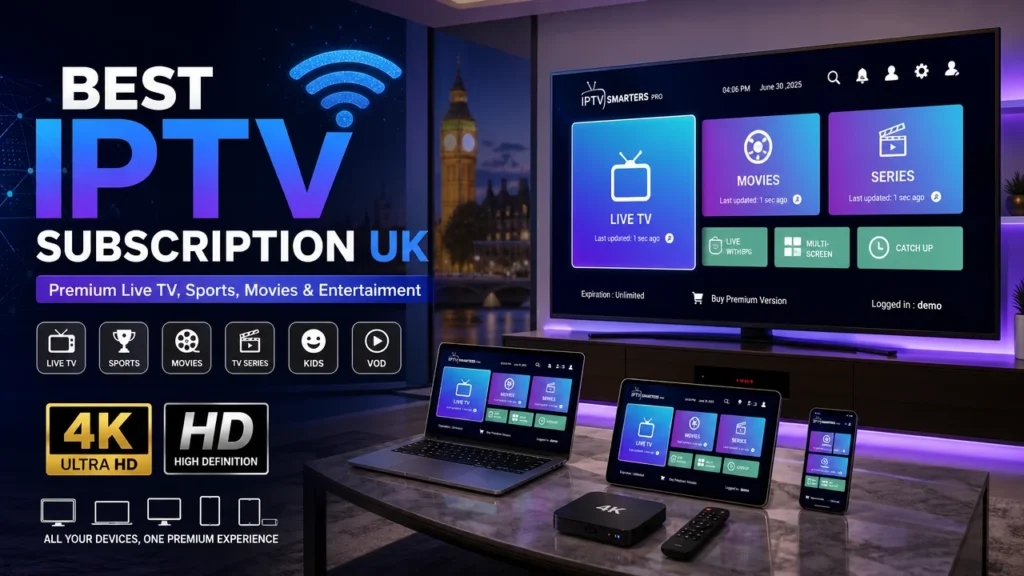
The interface example above shows a premium IPTV subscription with 4K live sports and a structured video-on-demand library. That layout is what you should expect from a mature provider, not a cluttered list of random streams. When you test a provider, pay attention to how quickly the EPG loads and whether the channel categories make sense. A clean interface often hints at a better-maintained server backbone.
How IPTV Providers Compare to Cable and Satellite
Before you cut the cord, it helps to see the tradeoffs side by side. The table below compares IPTV providers with traditional cable or satellite service across the criteria that matter most to real viewers.
The table does not declare a single winner for everyone. If you need guaranteed local sports with no buffering and do not mind paying for it, cable still has a place. But if you want affordability, device freedom, and global content, IPTV providers are hard to ignore.
Compare premium line configurations and promotional limits.
Check Out iptv providers Deals →Who IPTV Providers Work Best For
Not every household needs IPTV. Here is a quick profile check to see if the service fits your viewing habits.
Sports fans who want more than local coverage. IPTV providers are especially popular with viewers who follow international soccer, boxing, UFC, cricket, NBA, or F1. The best iptv providers for sports often bundle multiple leagues in one subscription.
Cord-cutters on a budget. If you already pay for high-speed internet and refuse to pay $120 for cable, an IPTV subscription can replace most of your live TV needs for a fraction of the cost.
Households with multiple devices. Families with a Firestick on one TV, an Android box on another, and phones for everyone will find IPTV far more flexible than renting extra cable boxes.
International viewers and expats. Access to channels from Latin America, Europe, Africa, South Asia, and the Middle East is a major reason people search for affordable iptv providers for usa audiences who still want home-country programming.
Travelers and second-home owners. Because the service follows your login, you can take your subscription with you, even if the content library changes slightly based on your location.
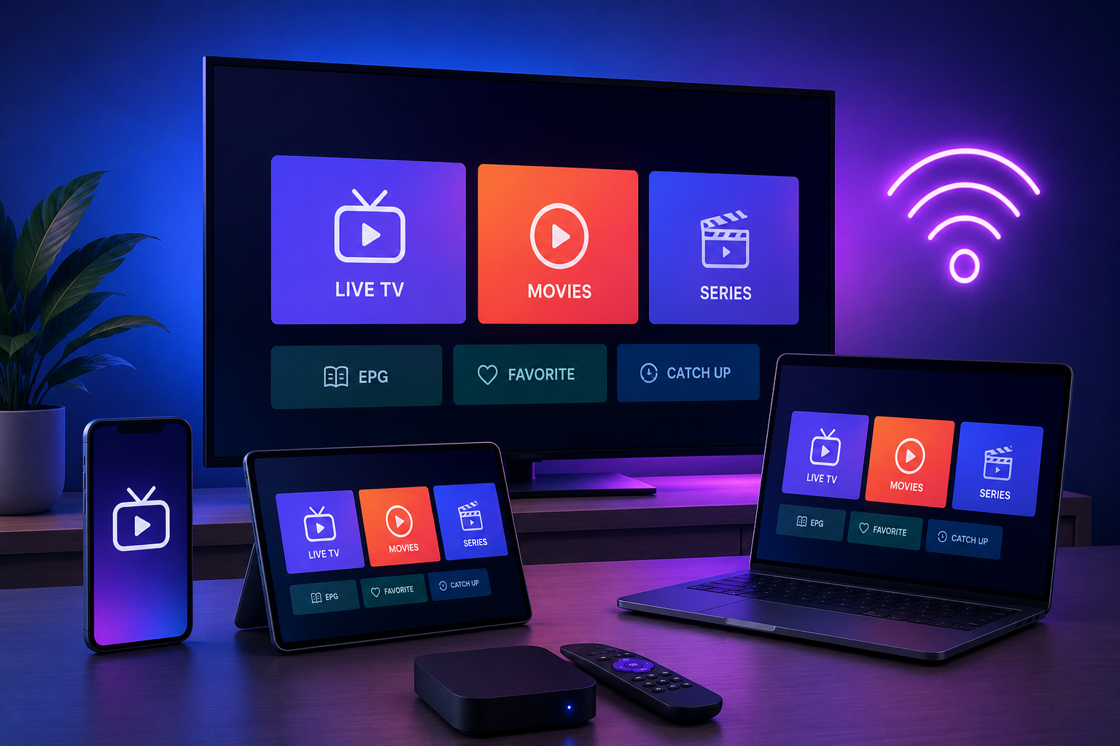
As the illustration above shows, a single IPTV subscription can power several devices at once, depending on the provider’s connection limit. Before you buy, confirm how many simultaneous streams the plan includes. Some providers include one or two connections by default and charge extra for more.
How to Get Started with an IPTV Provider Without Regret
A rushed purchase is the most common reason people get stuck with a bad IPTV service. Follow these steps to reduce risk and find a provider that actually matches your needs.
- Clarify your viewing priorities. Are you buying for sports, movies, international channels, or local news? Write down the must-have channels. This helps you avoid paying for 10,000 channels you will never open.
- Check your internet speed. A minimum of 25 Mbps down works for HD streams, but 50 Mbps or higher is better for 4K and for households with multiple devices. Use a wired connection on your main TV if possible.
- Shortlist providers with free trials. The best way to judge a service is to test it. Look for iptv providers with free trial offers, 24-hour tests, or low-cost one-month plans. Avoid providers that demand a full year upfront before you can see a single channel.
- Read recent feedback from real users. Search iptv providers reviews 2026 on forums, Reddit, and review sites. Do not rely only on the provider’s own website. Pay attention to comments about buffering, downtime, and support response times.
- Decide where to buy your subscription. If you ask where to buy iptv subscription, the safest answer is through a provider with a long track record, clear payment instructions, and responsive customer support. Avoid random sellers on social media who cannot explain their server setup.
- Test on the device you actually use. If you plan to watch on a Firestick, install the app on that Firestick—not on your PC—before paying. Some services work better on Android than on Apple TV, or vice versa.
- Start with one month. Even if a yearly plan looks cheaper, your first purchase should be monthly or a trial. If the service survives a full month of sports weekends and evening prime time without constant buffering, then consider a longer plan.
During your trial, pay attention to EPG accuracy, channel zapping speed, VOD quality, and whether the service works during peak hours. A provider that performs perfectly at 3 p.m. on a Tuesday might fall apart during a Sunday night football game.
Frequently Asked Questions
Choosing between iptv providers does not have to be overwhelming. The right service for you depends on your channel priorities, your devices, your internet reliability, and your tolerance for occasional buffering. Start with a clear list of must-have channels, test a few providers with free trials, and never commit to a long-term plan before you have used the service for at least a few weeks.
If you want a curated entry point into the current market, the platform linked below is worth reviewing alongside your shortlist. Use it as a comparison resource, not as an automatic buy trigger.
Featured Streaming Selection:
Find Out More About iptv providers →Affiliate Disclosure: Clicking this secure link verified by our network supports our team through standard partnership terms at zero extra cost to your invoice.
This article contains affiliate links. Our editorial analysis remains independent.