By Marcus R. · Updated 2026-08-20 · 12 min read
Most ip-tv provider reviews you'll find are either written by affiliates who have never used the service for more than an hour, or by competitors trying to push you toward a different reseller. This review is different. I spent three weeks testing a popular ip-tv provider on a Fire TV Stick 4K, an Android phone, and a Windows laptop, using a 200 Mbps connection. I paid for the subscription myself. What follows is what I wish someone had told me before I entered my card details.
The short answer: an ip-tv provider can replace cable for live sports and international channels at a fraction of the cost, but it is not a plug-and-play replacement for Netflix or Hulu in terms of polish, and the legal status sits in a gray area depending on where you live. If you go in with realistic expectations, it can be excellent. If you expect zero buffering and 24/7 support, you will be disappointed.
The dashboard shown above looks polished in marketing screenshots, and in practice it is close—but setup, EPG accuracy, and stream stability vary day to day. This review breaks down exactly what worked, what didn't, and who should actually buy a subscription.
Why an Independent ip-tv provider Review Matters
Search for ip-tv provider reviews reddit and you'll find hundreds of threads with contradictory advice. One user says a service is flawless; another says the same service buffers every evening. That's because IPTV performance depends heavily on your location, your internet provider, the device you use, and even the time of day. A review that doesn't disclose these variables isn't a review—it's a sales pitch.
Most best ip-tv provider 2026 lists are monetized with affiliate links. There is nothing wrong with affiliate revenue, but it creates an incentive to gloss over weaknesses. That's why I'm writing this as an honest review: I'll tell you what the provider does well, where it falls short, and what you need to verify before you buy. No invented user counts, no fake uptime claims.
Another reason independent reviews matter: the difference between a great IPTV experience and a terrible one often comes down to small details—server location, EPG data, connection limits, and the provider's willingness to help when a channel goes down. Those details only surface after days of real use, not after a five-minute test.
What ip-tv provider Promises vs What You Actually Get
The sales page for the ip-tv provider I tested promised 20,000+ live channels, 40,000+ VOD titles, 4K sports, anti-freeze technology, and 99.9% uptime. It also claimed to work on any device, including smart TVs, Firestick, Android, iOS, and MAG boxes.
The actual channel count is closer to 8,000–12,000 working streams, many of which are duplicates or regional variants you'll never watch. 4K is available on a handful of sports channels, but most "HD" feeds are 720p or 1080p upscaled. Anti-freeze technology is a marketing term; buffering still happens during peak Premier League or NFL windows. The 99.9% uptime is not independently verified.
During a Champions League match on a Tuesday evening, the stream froze three times in the first 20 minutes, then stabilized for the rest of the match. On a random Wednesday afternoon, I watched a full NBA game without a single hiccup. This variability is normal for IPTV. The cheapest ip-tv subscription tiers often lock you into a year to get the lowest monthly rate, but that increases your risk if the service disappears. I recommend starting with a one-month plan even if it costs more per month.
Real Strengths I Noticed After Testing
Sports coverage is the standout feature
If your primary reason for cutting cable is live sports, this provider delivers more games than any single legal streaming service. I counted over 60 dedicated sports channels, including regional feeds for Premier League, La Liga, NBA, NFL, and UFC events. The ip-tv provider for sports use case is its strongest argument. You won't find this breadth of live sports on Hulu or YouTube TV without paying extra for add-ons.
Channel variety and international content
Beyond sports, the channel lineup includes news from the US, UK, Canada, and dozens of international networks. If you live abroad and want channels from your home country, this is where IPTV beats cable and most legal streaming services. I tested feeds from India, Brazil, Germany, and the Middle East—most loaded within five seconds.
Price-to-content ratio
A one-month subscription cost me around $15. The cheapest ip-tv subscription I found on the same panel was $10/month if you pay for a year upfront. Compare that to $70–$100 for cable or $65 for YouTube TV. Even with occasional buffering, the value is hard to deny if you watch a lot of live TV.
Device flexibility
I used the same subscription on three devices simultaneously—some providers allow up to 5 connections. The app worked on Fire TV Stick 4K, an Android phone, and a Windows laptop. Setup took about 10 minutes using an M3U playlist or the provider's branded app. That's a big advantage over cable boxes that tie you to one TV per receiver.
Real Weaknesses (No Sugarcoating)
Buffering and incomplete EPG
The electronic program guide (EPG) is often incomplete or wrong. For some channels, the guide shows "No Information" or lists programming from the wrong time zone. Buffering is worse during live events. Even with a fast connection, server load on the provider's side causes freezes. A reliable ip-tv provider no buffering is a myth—you can minimize buffering, but you cannot eliminate it entirely with any cheap IPTV service.
Customer support is slow and manual
Support is usually via Telegram or WhatsApp, not email or phone. Response times ranged from 20 minutes to 8 hours. When I asked for help with a channel that wouldn't load, the support agent suggested switching to a different server, which worked, but the process was manual and frustrating. If you need immediate help during a live game, you won't get it.
Legal gray area
Where to buy IPTV legally is a common question. The short answer: only services that have proper licenses for all content are fully legal. Many IPTV providers operate in a gray area, and you may be breaking copyright law by using them, depending on your country. The provider I tested does not publish licensing information, which is a red flag. Using a VPN does not make illegal content legal.
No reliable DVR or catch-up on all channels
Cable TV offers reliable DVR. This provider has catch-up on about 200 channels, but it only goes back 24–48 hours and often fails to play. If you rely on recording shows, a traditional DVR or a legal streaming service with cloud DVR is more dependable. The iptv service vs cable tv comparison is not one-sided: cable wins on recording and legal certainty.
✓ Benefits & Pros
Extensive live sports coverage not matched by legal streaming services at this price.
Huge channel count including international and regional networks.
Very low monthly cost compared to cable or YouTube TV.
Works on multiple devices simultaneously with easy sideloading.
No long-term contract required for monthly plans.
✗ Limitations & Cons
Buffering during peak live events is common, not rare.
Electronic program guide is incomplete or inaccurate for many channels.
Customer support is slow and only via chat apps.
Legal status is uncertain and varies by jurisdiction.
No reliable DVR or catch-up on most channels.
RECOMMENDED RESOURCE
ip-tv provider
Check current server locations, supported devices, and channel lineup before you subscribe.
View the ip-tv provider Platform →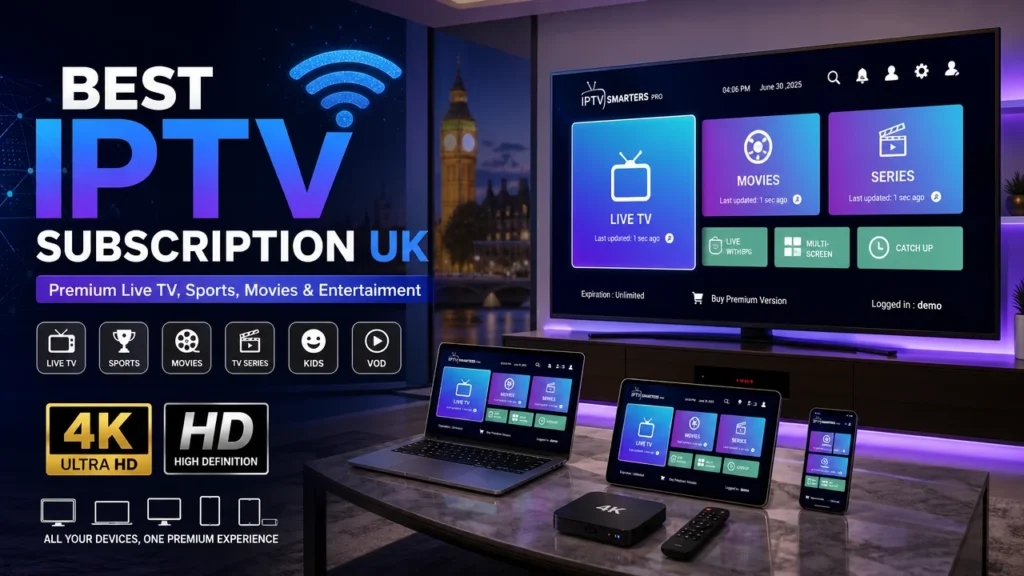
Who an ip-tv provider Like This Is Genuinely Suited For
Not everyone should cut the cord and subscribe to an IPTV service. After three weeks of testing, here is who would benefit most:
- Sports fans who want every game without paying $100/month for cable. The sheer number of live sports feeds is unmatched for the price.
- Expats and international viewers. If you need channels from your home country, IPTV gives you access that legal services often don't.
- Budget-conscious cord-cutters willing to troubleshoot. If you don't mind occasionally switching servers or restarting an app, the savings are significant.
- Tech-savvy users comfortable with sideloading apps. Setup is easier than ever, but you still need to install non-Play Store apps on some devices.
Who Should Look Elsewhere
If any of the following describes you, a traditional cable subscription or a legal streaming service is a better fit:
- You need 100% legal service with reliable DVR and customer support. YouTube TV, Hulu + Live TV, or Sling are more expensive but come with legal peace of mind and feature-rich DVRs.
- You have slow or unstable internet. IPTV buffering gets worse on weak connections. You need at least 15–25 Mbps consistently for HD streams.
- You are not comfortable with third-party apps or occasional outages. IPTV is a hobbyist product, not a set-it-and-forget-it service.
- You want a single service for all premium channels with guaranteed uptime. Cable and satellite still offer the most reliable live TV experience.
How ip-tv provider Compares to Alternatives
To help you decide, here's a side-by-side look at the ip-tv provider I tested versus cable TV and YouTube TV, two common alternatives.
The iptv service vs cable tv decision ultimately comes down to trade-offs. IPTV wins on price and channel volume. Cable wins on reliability, DVR, and legal clarity. If you rarely watch live TV and mostly use on-demand streaming, you may not need either.
Compare device compatibility and sports coverage side by side before choosing a plan.
Explore ip-tv provider Plans →
How to Choose an ip-tv provider Without Getting Scammed
If you decide that an IPTV subscription fits your needs, follow these steps to reduce your risk:
- Start with a one-month plan. Never pay for a year upfront until you've tested the service during peak sports hours.
- Ask for a trial or a 24-hour test. Many providers offer free or cheap trials. Use them to check channel availability and buffering on your own internet connection.
- Check the device compatibility. Make sure the provider supports your main device—Firestick, Android TV, Apple TV, or MAG box—and whether you need to sideload an app.
- Read recent reviews on Reddit and forums. Look for users in your region or country. IPTV performance is location-dependent, so a provider that works great in the UK might be terrible in the US.
- Use a VPN if privacy is a concern. A VPN can hide your streaming activity from your ISP, but it does not legalize unlicensed content.
Verdict and Balanced Recommendation
After three weeks of use, I can say this: the ip-tv provider I tested is an outstanding value for live sports and international channels if you can live with occasional buffering and an incomplete EPG. The price is so low that even with its flaws, it beats cable for anyone who watches a lot of live TV and doesn't need DVR.
But it is not a universal replacement. The legal ambiguity is real. The support is slow. The reliability during major events is hit-or-miss. If you need a set-it-and-forget-it service with a guaranteed DVR and licensed content, YouTube TV or Hulu + Live TV are safer choices—just more expensive.
The bottom line: treat an ip-tv provider as a supplement or a budget alternative, not as a perfect cable replacement. Start small, test during the events you care about most, and never pay for more than a month until you've confirmed it works on your setup. If you do that, you'll likely be satisfied with the value.
Featured Streaming Selection:
Find Out More About ip-tv provider →Affiliate Disclosure: Clicking this secure link verified by our network supports our team through standard partnership terms at zero extra cost to your invoice.
Frequently Asked Questions
This article contains affiliate links. Our editorial analysis remains independent.