By Marcus T. · Updated 2026-08-19 · 14 min read
IPTV stands for Internet Protocol Television. How does IPTV work? At its simplest, it replaces the coaxial cable or satellite signal with your internet connection. A provider encodes live TV and on-demand video into data packets, sends them over broadband, and a compatible app or set-top box decodes those packets back into video on your screen.
The diagram above illustrates that server-to-screen path. You do not need a dish, a cable box leased from a local provider, or a traditional antenna. You need a reasonably stable internet connection, a supported device, and a subscription from a provider that manages the server infrastructure.
That explanation is simple. What is not simple is choosing a provider. Many buyers regret their choice because they focus on channel count or price instead of the technical and legal factors that determine whether the service actually works when they sit down to watch.
Why many people regret their IPTV choice
The most common regret is not the concept of IPTV itself. It is buying a service that under-delivers during the moments that matter most. Live sports are the clearest example. A cheap subscription may work fine for a random movie channel on a Tuesday afternoon, then fail with buffering or a black screen during a major match.
Other buyers regret not checking device support first. They assume an IPTV subscription will work on every smart TV, Firestick, phone, and tablet in the house. How does IPTV work on smart TV? It depends on the app the provider supports. Some services work only through third-party apps that require manual configuration. Others have branded apps for specific platforms but not all.
Another source of regret is buying multiple screens and discovering the provider only allows one concurrent stream. Families often need two or three simultaneous connections. If the provider does not disclose that up front, the subscription becomes useless for a shared household.
Legal clarity is also a factor. Many buyers ask, is IPTV legal in the US? The answer depends on the provider. Licensed services that have agreements with broadcasters are legal. Unverified subscriptions selling thousands of premium channels for a few dollars per month usually are not. Buyers who ignore this distinction can face sudden service shutdowns, frozen payments, or no recourse when the service disappears.
Criteria that should drive your decision
Before comparing packages, define what you actually need. The best IPTV service for live sports may not be the best option for a household that mainly watches news and movies. Sports fans need low-latency streams, reliable server uptime during peak events, and often multiple device support.
Device compatibility is non-negotiable. If you plan to watch on a smart TV, ask whether the provider supports Samsung, LG, Android TV, or Apple TV. How does IPTV work on smart TV? It usually requires downloading an app, entering a playlist URL or login credential, and letting the app fetch the channel list. If the provider does not support your TV’s app store, you may need a separate streaming stick.
Many buyers choose a Firestick because it is inexpensive and flexible. How to set up IPTV on Firestick usually involves installing a player app such as TiviMate, IPTV Smarters, or the provider’s own APK. Then you load the M3U playlist or Xtream Codes login. The setup is not hard, but the quality of the app and the stability of the provider’s portal matter more than the device.
Other criteria include catch-up TV, electronic program guide support, VOD libraries, server location, and customer support response time. A provider that cannot explain its server architecture or device limits should be treated with caution.
What you need to know about the current IPTV market
The market is crowded and fragmented. You will find licensed IPTV platforms operated by telecom companies, standalone legal streaming services, and a large gray market of unverified resellers. The difference is not always obvious at first glance.
IPTV vs cable: which is better? For many viewers, IPTV offers more flexibility because it works across multiple devices, does not require leased hardware, and can be cheaper than a traditional cable bundle. Cable, however, often has stronger legal clarity, local support, and consistent sports licensing. The better choice depends on whether you value flexibility or predictability.
Reddit threads in 2025 are filled with mixed buyer reports. Some users praise a service for six months, then detail an outage during a pay-per-view event. Others complain that the channel list looked enormous but many channels never loaded. The common lesson is that a large channel count does not mean reliable access.
If you are researching where to buy a reliable IPTV subscription, look for providers that offer a paid trial or a short-term plan before long commitments. Avoid services that only sell yearly plans through untraceable payment methods. A legitimate seller should be willing to let you verify the service on your own network and devices.
Questions to ask before buying IPTV
You do not need to become a network engineer. You do need to ask the right questions and pay attention to vague answers.
Ask how many simultaneous connections are included. Ask which devices are supported and which apps you will need. Ask whether the service includes an electronic program guide, catch-up, and video on demand. Ask whether the provider has servers in your region or near your country to reduce latency.
Ask about legal licensing. A provider that dodges the question or says “it’s fine because it’s IPTV” is not helping you. Ask about refund policies and trial options. Ask what happens during major live events, because that is when weak infrastructure collapses.
Finally, ask about buffering. Every provider will say they have no buffering. A more useful question is: what can I do on my end if I experience buffering? A good provider will explain speed requirements, server switching, app settings, and router configuration.
Warning signs to spot before subscribing
The first warning sign is an unlimited channel list sold for a few dollars per month. If the price seems too good to be true, the service is likely not licensed. It may work for a while, but you have no guarantee, no consumer protection, and no one to contact when it stops.
Watch for providers that only accept cryptocurrency or gift cards. That is common in unverified services because the seller wants to avoid chargebacks. A lack of a trial is another red flag. Even a 24-hour paid trial gives you a chance to test the service on your setup.
Vague support is also dangerous. If the only support channel is a Telegram group or a WhatsApp number, you are not dealing with a mature operation. Legitimate services usually have ticket systems, email support, or a clearly documented knowledge base.
✓ Benefits & Pros
Works across smart TVs, Firestick, phones, tablets, and computers without a cable box.
Often cheaper than traditional cable bundles for a comparable channel range.
Flexible subscription terms with monthly or quarterly plans from many providers.
Access to international channels, live sports, and on-demand content in one interface.
✗ Limitations & Cons
Quality depends heavily on your internet stability and the provider’s server capacity.
Unverified providers can disappear overnight with no refund or support.
Some services lack proper catch-up, DVR, or reliable EPG data.
Device setup may require sideloading apps or manually entering playlist URLs.
RECOMMENDED RESOURCE
how does iptv work
Compare premium line configurations and promotional limits before you commit.
Check Out how does iptv work Deals →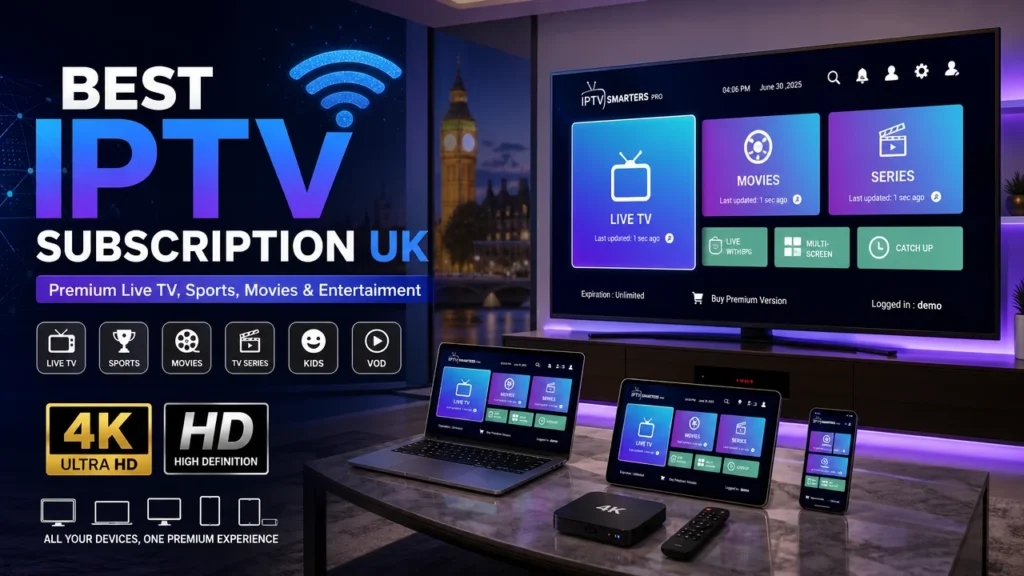
The example above shows why the interface matters as much as the channel list. A cluttered app with no program guide can make hundreds of channels feel unusable. A well-organized EPG lets you see what is live, what is coming up, and where your saved categories sit.
Comparison table of available options
This comparison is not about one specific brand. It is about how different television delivery models stack up for real viewers. Use it to decide whether IPTV is the right path for your household.
See current details, seasonal promos, and full tier packages before making a decision.
Learn more about how does iptv work →Recommendation by budget and needs
Your budget should match your actual viewing habits. If you only need local channels and a few entertainment networks, do not pay for a massive international package. If you need live sports, prioritize server quality and low-latency streams over price.
For a low budget under $15 per month, you can find legitimate smaller IPTV packages, but they may lack premium sports and reliable customer support. In this range, you are more likely to encounter gray-market resellers, so check legality and trial options carefully.
For most households, the $15 to $25 per month range offers the best balance. You should expect multiple device support, a working EPG, catch-up TV, and a responsive support team. This is also the range where licensed providers start to compete more directly with cable.
Above $25 per month, you are essentially buying premium streaming or full cable replacement. This can be worthwhile for sports fans who need 4K streams, multiple simultaneous connections, and stable access to specific leagues.
If you plan to use a Firestick
How to set up IPTV on Firestick is a common question, and the steps are usually the same across providers:
- Go to the Firestick home screen and enable installation from unknown sources if the provider uses a custom APK.
- Install a player app such as TiviMate, IPTV Smarters, or the provider’s own app from the Amazon Appstore or via Downloader.
- Open the app and enter either the M3U playlist URL or the Xtream Codes username and password supplied by your provider.
- Let the app sync the channel list and EPG data, then test several live channels and a VOD title.
- Check that multiple streams work if you paid for more than one connection, and restart the app to confirm settings persist.
How to maximize your IPTV investment
The difference between a frustrating IPTV experience and a reliable one often comes down to local network setup. The best provider cannot fix a weak Wi-Fi signal or a crowded home network.
A practical IPTV buffering fix guide starts with your internet speed. For HD streams, you generally need at least 15 to 25 Mbps of stable download speed. For 4K content, aim for 50 Mbps or more. Speed is not the only factor. Jitter and latency matter, especially for live sports.
Use an Ethernet cable instead of Wi-Fi whenever possible. If you must use Wi-Fi, place the streaming device near the router or use a mesh system. Close background downloads, cloud backups, and large file transfers while watching live TV.
Clear the IPTV app cache regularly. On Firestick and Android TV, app cache can grow large and slow down channel loading. In the app settings, force stop and clear cache every few weeks. Also, avoid installing too many background apps on low-memory sticks.
If buffering persists, change the provider’s server or portal if the app allows it. Some IPTV apps let you switch between servers from the settings menu. Using a VPN can sometimes improve routing, but it can also add latency. Test with the VPN off first, then compare.
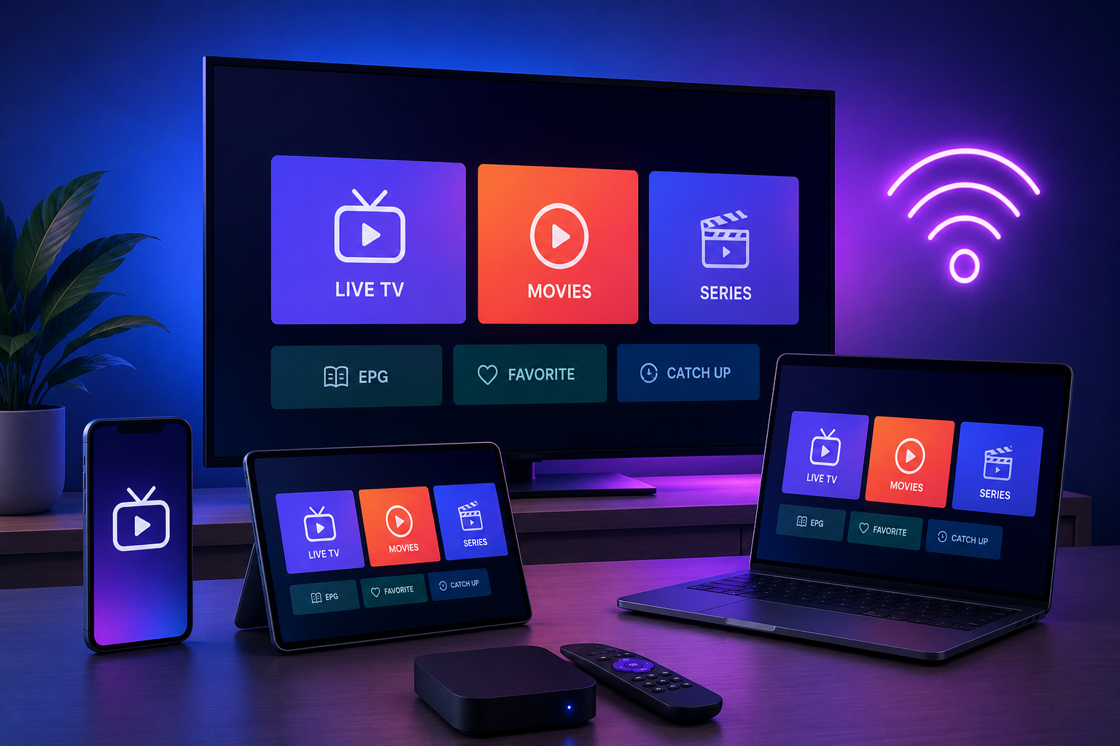
The diagram above highlights a point many buyers overlook: your network is part of the IPTV chain. Even a perfect provider cannot compensate for a router that drops packets or a Wi-Fi signal that fluctuates.
Final recommendation
How does IPTV work? Once you understand the server-to-screen flow, the buying decision becomes clearer. You are choosing a provider that must maintain servers, deliver stable streams, support your devices, and answer when something goes wrong.
Do not buy based on channel count alone. Start with a short-term or trial plan, test it on your primary device during the kind of content you watch most, and verify support responsiveness. Whether you watch sports, international news, or movies, the same rule applies: reliability beats volume.
For most readers, a provider that offers a clean app, multiple device support, a real EPG, and transparent pricing is worth more than a bargain service with 10,000 channels that freeze constantly.
Featured Streaming Selection:
Explore how does iptv work Plans →Affiliate Disclosure: Clicking this secure link verified by our network supports our team through standard partnership terms at zero extra cost to your invoice.
Frequently Asked Questions
This article contains affiliate links. Our editorial analysis remains independent.