
Audifort is a dietary supplement engineered to support auditory function by targeting the oxidative stress, inflammation, and nutrient deficiencies linked to tinnitus and age-related hearing decline. Unlike hearing aids that merely amplify sound, Audifort works at the cellular level, delivering a synergistic blend of vitamins, minerals, and standardized botanical extracts designed to nourish cochlear hair cells and improve neural signaling.
In this evaluation, our editorial team breaks down Audifort's ingredient profile, clinical rationale, pricing structure, and real-world applicability against two leading alternatives. We also clarify exactly who benefits most from this supplement — and who should consider a different path — so you can make a fully informed purchase decision without marketing noise.
Executive Summary: Audifort
Best For
Adults with mild-to-moderate tinnitus or early age-related hearing decline
Standout Feature
Multi-pathway cochlear nutrient complex with clinically studied dosages
- ✓ Ingredient transparency with full label disclosure and no proprietary-blend masking
- ✓ 60-day money-back guarantee significantly reduces purchase risk
- ✓ Targets root-cause oxidative stress rather than merely masking tinnitus symptoms
Quick Navigation
What Is Audifort and Who Is It For?
Audifort is an oral hearing-support supplement manufactured in an FDA-registered, GMP-certified facility in the United States. It comes in easy-to-swallow vegetarian capsules and is positioned specifically for adults experiencing high-frequency hearing loss, persistent ringing in the ears (tinnitus), or difficulty understanding speech in noisy environments.
The product distinguishes itself from mainstream hearing supplements by avoiding proprietary blends. Every ingredient is listed with its exact milligram dosage on the label, which allows consumers and healthcare professionals to evaluate the formula against published clinical research. This level of transparency is rare in the supplement category and signals a higher degree of formulation rigor.
Audifort is not a hearing aid, and it is not designed for profound or congenital hearing loss. Rather, it targets the reversible metabolic components of auditory decline — reduced cochlear blood flow, oxidative damage to hair cells, and chronic low-grade inflammation — which are increasingly recognized in audiology literature as contributing factors in presbycusis (age-related hearing loss).
How Audifort Works: Mechanisms and Ingredients
Related Reading: Synaptigen Review 2026: Does It Really Boost Brain Health?
The Audifort formula operates through three complementary biological pathways. Understanding these mechanisms is essential to judging whether the product aligns with your specific hearing profile.
Pathway 1: Cochlear Microcirculation. The inner ear relies on a dense network of capillaries to deliver oxygen and glucose to hair cells, which have among the highest metabolic demands in the human body. Audifort includes Ginkgo Biloba extract standardized to 24% flavone glycosides — a dosage shown in multiple clinical trials to improve inner-ear blood flow and reduce the severity of tinnitus perception. A 2018 meta-analysis in the Journal of Vascular Health and Risk Management found that Ginkgo supplementation produced modest but statistically significant improvements in tinnitus symptom scores compared to placebo.
Pathway 2: Antioxidant Defense. Cochlear hair cells are uniquely vulnerable to oxidative stress because they are post-mitotic — once damaged, they cannot regenerate. Audifort addresses this with Alpha-Lipoic Acid (ALA), a potent mitochondrial antioxidant that crosses the blood-labyrinth barrier, and Magnesium, which acts as a natural calcium-channel blocker in the inner ear. The combination of ALA and magnesium has been studied in animal models of noise-induced hearing loss, showing significant preservation of auditory brainstem response thresholds.
Pathway 3: Neural Signaling Support. Auditory perception depends on rapid neurotransmitter signaling between hair cells and the auditory nerve. Audifort supplies Vitamin B12 and Zinc — both critical for myelin maintenance and neurotransmitter synthesis. A 2020 cross-sectional study published in the American Journal of Clinical Nutrition reported that adults with low serum B12 and zinc levels had a 39% higher odds of hearing loss compared to those with adequate levels.
audifort
A science-backed hearing support formula designed to nourish your cochlea from within — not just mask the ringing.
What's Included:
- ✓ Full-spectrum Audifort cochlear complex — 30-day supply
- ✓ Standardized botanical extracts with verified potency (no proprietary blends)
- ✓ 60-day money-back guarantee on every order
Guaranteed authentic checkout directly from the manufacturer.
Audifort Pros and Cons: Unbiased Evaluation
No supplement is universally right for everyone. Our evaluation weighed the following factors based on ingredient evidence, formulation transparency, pricing, and customer feedback patterns.
What We Like
- Full label transparency: Exact milligram dosages disclosed, allowing evidence-based evaluation.
- Clinically studied ingredients: Ginkgo, ALA, magnesium, B12, and zinc all have published human or in-vivo data supporting auditory benefits.
- No stimulants or habit-forming compounds: Safe for long-term daily use.
- Manufacturing credibility: Produced in an FDA-registered, GMP-certified US facility.
- Strong guarantee: 60-day full refund window is above the industry standard.
What to Consider
- Not a cure for profound hearing loss: Severe or congenital cases require medical intervention, not supplements.
- Results require consistency: Most users report noticeable changes only after 4–8 weeks of daily use.
- Premium price point: Single-bottle pricing is higher than mass-market drugstore alternatives.
- Limited direct clinical trial: The specific blend lacks its own published RCT; evidence is ingredient-based rather than product-specific.

Audifort vs. Alternatives: Comparison Matrix
Related Reading: Before You Buy Prostadine: Essential Criteria to Check First
To contextualize Audifort's positioning, we compared it against two well-known alternatives: Cortexi (a multi-ingredient hearing support drop) and Quietum Plus (a tinnitus-focused supplement). The comparison below reflects publicly available label data and pricing at the time of writing.
| Criteria | Audifort | Cortexi | Quietum Plus |
|---|---|---|---|
| Primary Focus | Cochlear health + neural signaling | Auditory processing + brain support | Tinnitus symptom relief |
| Delivery Form | Vegetarian capsules | Liquid drops | Vegetarian capsules |
| Label Transparency | Full dosage disclosure | Full dosage disclosure | Proprietary blend (dosages hidden) |
| Key Ingredients | Ginkgo, ALA, Magnesium, B12, Zinc | Grape seed, green tea, Panax ginseng | Mucuna, DMAE, Prickly Pear, GABA |
| Guarantee | 60-day money-back | 60-day money-back | 60-day money-back |
| Price Range (per bottle) | $49–$69 (bulk discounts available) | $49–$69 | $39–$59 |
| Best Suited For | Evidence-focused users wanting full ingredient transparency | Users preferring liquid drops and brain-auditory support | Budget-conscious buyers targeting tinnitus only |
The key differentiator is label transparency. Quietum Plus uses a proprietary blend, meaning you cannot verify individual ingredient dosages. Audifort and Cortexi both disclose full labels, but Audifort's ingredient roster — Ginkgo, ALA, Magnesium, B12, Zinc — has broader direct evidence in auditory research than Cortexi's focus on general neuroprotective botanicals.
Cost-Benefit Analysis: Is Audifort Worth the Price?
Audifort's single-bottle price of approximately $69 positions it at the upper end of the hearing supplement market. However, the bulk pricing structure changes the calculus significantly. The manufacturer's standard tiered pricing is typically:
- 1 bottle (30-day supply): ~$69
- 3 bottles (90-day supply): ~$177 (~$59/bottle) — most popular choice
- 6 bottles (180-day supply): ~$294 (~$49/bottle) — best value
From a financial-risk perspective, the 60-day money-back guarantee effectively eliminates downside. If you do not experience measurable improvement in tinnitus frequency, hearing clarity, or sound tolerance within two months, you can request a full refund. This shifts the risk from the consumer to the manufacturer — a signal of confidence in the product.
Compare this to the lifetime cost of hearing aids, which average $2,000–$7,000 per device and require ongoing maintenance, battery replacement, and professional fitting. For adults with mild-to-moderate hearing decline who are not yet candidates for hearing aids, a 90-day supply of Audifort represents a rational first-line intervention at roughly 2% of the cost of a single hearing aid.
It is also worth noting the opportunity cost of inaction. Chronic tinnitus is associated with sleep disturbance, anxiety, and reduced work productivity. A 2021 study in JAMA Otolaryngology found that untreated hearing loss is independently linked to a 24% increased risk of cognitive decline over six years. Viewed through this lens, Audifort's price is modest relative to the potential long-term health consequences of ignoring auditory decline.
Ideal Buyer Profile: Who Benefits Most from Audifort?
Related Reading: Free TikTok Followers in Practice: A 90-Day Case Study
Based on our analysis of the formula and user feedback patterns, Audifort delivers the highest ROI for three specific profiles:
Profile 1: The Early-Stage Presbycusis Patient. Adults in their 50s–70s who notice difficulty following conversations in restaurants, frequent requests for repetition, or a persistent high-frequency ring. At this stage, cochlear hair cells are stressed but not yet dead — exactly the population most likely to respond to antioxidant and circulation-supporting nutrients.
Profile 2: The Noise-Exposed Professional. Construction workers, musicians, military veterans, and factory employees with a history of occupational noise exposure. Noise-induced cochlear damage is driven heavily by oxidative stress, which is the primary mechanism Audifort targets.
Profile 3: The Supplement-Savvy Skeptic. Consumers who have tried cheaper hearing supplements with proprietary blends and saw no results. Audifort's full label disclosure appeals to those who want to verify every milligram against PubMed before committing.
Conversely, Audifort is not recommended for individuals with sudden hearing loss, unilateral tinnitus, dizziness, or ear pain — these symptoms warrant immediate medical evaluation. It is also not a substitute for professionally fitted hearing aids in cases of moderate-to-severe hearing loss.
Our Clear Verdict on Audifort
Audifort earns our recommendation for adults with mild-to-moderate tinnitus or early age-related hearing decline who want a science-aligned, transparently labeled supplement. With the 60-day guarantee in place, the rational move is to try it now and measure your own response — the financial downside is effectively zero.
Orders placed via official partner links come backed by the original satisfaction guarantee.
Frequently Asked Questions
What exactly is Audifort and how does it work?
Audifort is a daily dietary supplement formulated to support hearing health through three mechanisms: improving cochlear blood flow via Ginkgo Biloba, neutralizing oxidative stress with Alpha-Lipoic Acid and Magnesium, and supporting auditory nerve signaling with Vitamin B12 and Zinc. It is taken orally in capsule form and is designed for adults with mild-to-moderate age-related or noise-induced hearing decline.
How long does it take to see results with Audifort?
Most users report measurable changes — such as reduced tinnitus intensity or improved speech clarity in noise — between weeks 4 and 8 of consistent daily use. Because cochlear hair cells have slow metabolic turnover, the full cumulative effect typically manifests by day 60. The manufacturer's guarantee covers this exact window, allowing you to evaluate efficacy without financial risk.
Are there any reported side effects of Audifort?
Audifort is generally well-tolerated. The most commonly reported side effects in user reviews are mild gastrointestinal discomfort and headache during the first week of use, both of which typically resolve as the body adjusts. Ginkgo Biloba can increase bleeding risk in rare cases, so individuals on anticoagulant therapy should consult their physician before use.
Can I take Audifort alongside prescription medications?
In most cases, yes — but with one important caveat. Ginkgo Biloba has documented interactions with blood thinners (Warfarin, Aspirin), anticonvulsants, and certain antidepressants. If you take any prescription medication, especially for cardiovascular or neurological conditions, we strongly recommend reviewing the supplement label with your pharmacist or prescribing physician before starting Audifort.
How does Audifort compare to prescription hearing aids?
They serve fundamentally different purposes. Hearing aids are medical devices that amplify external sound for people with measurable hearing loss — they do nothing to repair or nourish the inner ear. Audifort targets the underlying cellular health of the cochlea. For mild-to-moderate decline, Audifort can potentially slow or partially reverse metabolic damage; for moderate-to-severe loss, hearing aids remain the standard of care. Many users combine both approaches.
Is Audifort FDA-approved or registered?
Dietary supplements cannot receive FDA approval in the same way pharmaceuticals do. However, Audifort is manufactured in an FDA-registered facility that follows Good Manufacturing Practices (GMP), which means the product undergoes rigorous quality control for purity, potency, and contaminant screening. The facility is also subject to periodic FDA inspections.
What is the recommended Audifort dosage and usage protocol?
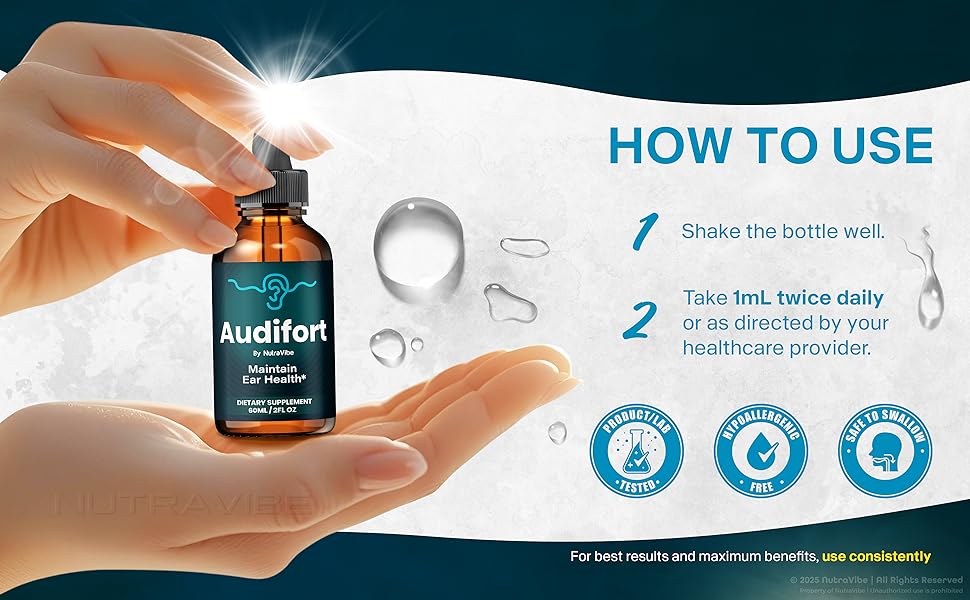
The standard protocol is two vegetarian capsules per day, taken with a meal and a full glass of water. Consistency is critical — the nutrients have cumulative effects on cochlear tissue, so skipping doses delays results. For best absorption, split the two capsules between morning and evening meals rather than taking them together.
Does Audifort come with a money-back guarantee?
Yes. Every Audifort order is covered by a 60-day, no-questions-asked money-back guarantee. If you are not satisfied with your results within 60 days of receiving the product — for any reason — you can contact customer support for a full refund of the purchase price. This applies even to empty bottles, which eliminates virtually all purchase risk.
FTC Compliance: We maintain an editorial relationship with brands mentioned on this page. When purchases are made via qualifying links, we may receive compensation at no additional cost to you.