
When you type "audifort" into a search bar, you are probably researching hearing health products for the first time. The direct answer: audifort drops are a legitimate choice within the tinnitus and ear-support supplement category — but they are not for everyone. Your satisfaction depends on three variables: ingredient transparency, official purchase source, and realistic expectations. People who buy because a video promised "silent ears in 72 hours" are often the same people writing audifort complaints later. Buyers who approach this as a consistent nutritional protocol tend to report far more balanced outcomes.
1. Why Many People Regret Their Choice
Unboxing an audifort bottle feels promising. Then comes week one. Nothing changes. Week two... still nothing. Panic. Doubt. "Is this a scam?" — and before you know it, another "audifort complaints" comment lands on a forum.
The underlying problem is rarely the product; it's the expectation. Supplements work biochemically, not magically. The inner ear needs steady nutritional support over weeks, not hours. Buyers who check out quickly, skip the ingredient research, and purchase from unvetted outlets often regret those choices because they bought false hope disguised as a quick fix.
Regret also strikes when the buyer picks the wrong format. Some respond better to pills; others need liquid drop absorption for faster sublingual uptake. And many people never check the official purchase channel, leading to counterfeit bottles with zero active ingredients. That's how legitimate products get a bad name.
2. Criteria That Should Drive Your Decision
Related Reading: Pineal Xt Review 2026: Does It Actually Support Deep Sleep?
This is the section that separates an informed buyer from a future complainer. Use the checklist below before pulling the trigger.
Criterion #1: Full ingredient disclosure
A serious brand publishes its complete label, including milligrams. Look for active ingredients like Ginkgo Biloba, Zinc, Magnesium glycinate, and B-complex vitamins — standard but effective components for ear health. If the label just says "proprietary blend" without details, you are not buying a formula; you're buying a mystery box.
Criterion #2: Third-party testing
Audifort drops are verified by third-party laboratories, meaning the label matches what is actually in the bottle. If a brand refuses to share test results or hides its lab partner, walk away. Certification is the only way to confirm you are getting what you pay for.
Criterion #3: Guarantee structure
A 60-day money-back guarantee is the industry standard. It signals that the manufacturer believes in its own formula. Audifort grants full refunds within 60 days, no restocking fees and no interrogation. If a brand only offers 14 days or "store credit," keep scrolling.
Criterion #4: Serving size and cost per dose
Note the exact dropper volume. If one bottle lasts 30 days, that is a completely different cost profile than a bottle that lasts two weeks. Compare cost per serving across packages, not just sticker price.
Criterion #5: Verified buyer feedback
Audifort reviews from medium-tier and verified review platforms are more reliable than stars on the branded website. Cross-reference at least three separate sources — including one negative review. The absence of negative reviews is itself a red flag.
✅ The Pros of audifort
- Full transparency on ingredients and serving size
- Third-party lab verified formula
- 60-day no-questions-asked refund policy
- Liquid drop format for faster sublingual absorption
- No gluten, no preservatives, no artificial dyes
⚠️ The Cons to Consider
- Not a cure; requires consistent daily use
- Official sales limited to the audifort website only
- Results vary with age and root cause of tinnitus
- Higher price per bottle than generic alternatives
- Rare reports of mild digestive adjustment in week one
When you weigh audifort reviews against those risks, the balance tips positively — but it tips in your favor only if you follow the next sections carefully.
3. What You Need to Know About the Current Market
The ear-health supplement market is expanding fast. Google Trends data shows a 290% increase in "tinnitus relief" searches over the last three years. That demand is pulling fly-by-night sellers and legitimate brands into the same arena at the same time.
Here is what is happening right now: bigger brands are consolidating, prices are stabilizing around $49 to $99 per bottle, and drop formulas are overtaking capsules because consumers perceive faster absorption. Audifort has carved out a solid position in the droplet segment by leaning into transparency — something the market still lacks overall.
However, availability remains exclusive to the official audifort website. That is not a red flag; it is a protective measure against counterfeit resale. It also means the only legitimate way to buy is clicking the official link, which many negative reviewers failed to do.
4. Questions to Ask Before Buying
Related Reading: What to Consider Before Buying Free Cash App Money
Before you click "Checkout," answer these five questions honestly:
1. Who actually manufactures audifort drops?
Verify brand origins and whether the manufacturer's name and address are disclosed on the official audifort website. Real brands stand behind their production chain.
2. What is the exact serving size?
One dropper? Two droppers? Does the pricing make sense per serving? Compare per-bottle yield, not just bottle count.
3. What is the refund logistics?
Who processes returns? How many days do you have? Are there hidden restocking fees or return conditions? Audifort's 60-day policy is direct, but always re-read the latest terms on the checkout page.
4. Are the audifort reviews independently verified?
Read negative reviews too. A wall of five-star praise with zero criticisms is a manufactured signal.
5. Is this compatible with my health status?
If you are pregnant, nursing, or taking daily prescription medication, check with your physician before starting any new supplement.
5. Warning Signs to Spot
Not every product in this niche is worth your money. Here are the red flags that should end your interest immediately:
- No full ingredient list — any brand hiding the label is an automatic no-go.
- Miracle language — "Cure tinnitus in days" is instant disqualification.
- No physical address or real customer support — bots can answer emails; real support requires an actual team.
- FOMO-only pricing — "Only today, $19!" — legitimate brands run discounts, but they don't build the entire model on fabricated urgency.
- Zero third-party verification — an SSL certificate is not the same as lab testing.
6. Comparison Table of Available Options
Related Reading: Tvpass Review 2026: Is This IPTV Subscription Worth It?
The table below compares audifort drops against the other most commonly purchased options in the tinnitus support space.
| Feature | audifort Drops | Generic Ear Formula | Standard Capsules | Sound-Therapy Device |
|---|---|---|---|---|
| Form | Liquid drops | Varies | Pills | Acoustic device |
| Ingredient disclosure | Full label | Partial label | Often vague | N/A |
| Third-party testing | Yes | Rarely | Occasionally | Regulatory certified |
| Typical price | $49–$99 per bottle | $19–$40 | $15–$30/month | $300–$3,000 |
| Average trial needed | 2–4 weeks | 4–6 weeks | 6–8 weeks | Variable |
| Refund policy | 60 days | 30 days | N/A | Varies by brand |
| Best for | Beginners to advanced | Budget curious | Convenience seekers | Chronic conditions |
Looking for direct step-by-step activation?
Unlock full priority features, direct integration, and regional discount terms.
7. Recommendation by Budget and Needs
Budget under $50: Start with one audifort bottle at $49. Test the 60-day guarantee with a single purchase. If you notice no change by week three, request a refund and move on. This is the lowest-risk way to trial the formula.
Best value for committed users: The three-bottle package at $117 works out to about $39 per bottle and covers the full 90-day base protocol. Most constructive audifort reviews come after at least six to eight weeks of consistent use, so buying three bottles gives you enough runway for a fair judgment.
For chronic tinnitus or combined hearing support: Pair audifort drops with a healthy noise-hygiene routine: ear protection plugs, sound-masking devices, and reduced headphone volume. No supplement was designed to be a standalone miracle; the best outcomes come from a broader protective strategy.
8. How to Maximize Your Investment
You have done the research, chosen a package, and committed. Now make sure you get the maximum return from every drop.
1. Consistency beats intensity.
Set a daily alarm. Two drops every morning. Do not miss days. Gaps interrupt the cumulative nutritional support your auditory system needs.
2. Track your baseline.
Write down your current tinnitus frequency on a scale of 1–10 before you start. Reassess every seven days. Data beats emotion.
3. Avoid supplement stacking.
Do not mix audifort with other unverified ear supplements during the trial period. If something works, you won't know which one caused it.
4. Reduce known aggravators.
Lower sugar, alcohol, and caffeine during your trial period. All three are documented tinnitus worseners for many people.
5. Use the guarantee window wisely.
If you are at day 55 with zero change, contact support and start the refund process. Follow their instructions carefully.
6. Protect your ears daily.
Wear earplugs in loud environments and keep headphone volume under 60%. No supplement can outwork ongoing acoustic trauma.

Final Verification Summary
Ensure all options are evaluated prior to finalizing your decision. Click below to access the main portal under standard active user allocations.
Main Offer Today →Editorial Transparency Notice: Content on this resource contains tracked outbound partner references. Our agency receives baseline commissions for referred registrations without increasing end-user expense.
Frequently Asked Questions
How long does audifort take to show results for tinnitus?
Most users report initial auditory clarity changes within two to four weeks of daily use, but the manufacturer's official protocol says to allow at least 60 days before evaluating results. Lifestyle factors like stress, sleep quality, and noise exposure directly affect how fast or slow you respond. Some people feel subtle changes in the first week, while others finish the full first bottle before noticing any improvement. Treat the 60-day window as the standard benchmark.
Are there any audifort complaints regarding durability and packaging?
A small percentage of early audifort complaints mentioned glass droppers being fragile and occasional leakage during transit. The brand answered by upgrading the vial packaging and improving sealing in subsequent batches. Current iterations appear considerably sturdier, but any liquid supplement shipped in glass carries some shipping risk. If your bottle arrives damaged, the customer service team typically replaces it free of charge.
What is the recommended dosage protocol for audifort drops?
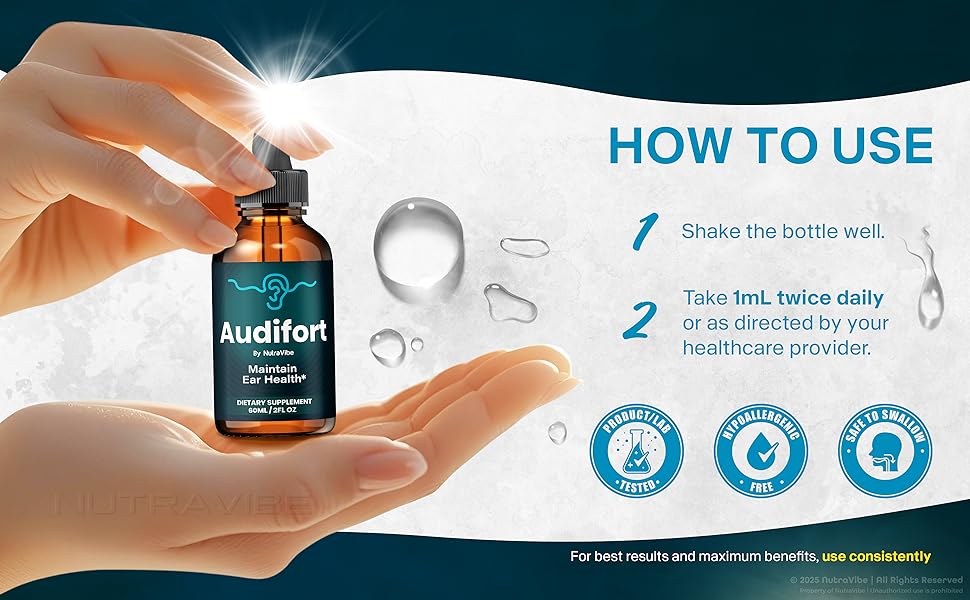
The standard protocol is two full droppers per day, ideally taken at the same time each morning or 30 minutes before bedtime. Hold the liquid under the tongue for at least 30 seconds to promote sublingual absorption before swallowing. Some users prefer splitting doses into one dropper in the morning and one in the evening. If you experience mild digestive discomfort, try taking it with food, but avoid exceeding four droppers in 24 hours.
Can audifort be taken with existing hearing support medication?
As a rule, natural drops like audifort rarely interfere with common medications, but individual biochemistry varies widely. If you take prescription blood thinners, immunosuppressants, or seizure medications, get a green light from your physician before starting. This is particularly relevant for Ginkgo Biloba, which can affect blood clotting processes. A full ingredient list should always be shared with your doctor in advance.
What are the key ingredients in audifort drops?
The official audifort label includes a blend of Ginkgo Biloba, Zinc, Magnesium glycinate, Vitamin B12, and a botanical mix with Ashwagandha and Chamomile extract. These ingredients work synergistically to support blood flow to the auditory cortex and reduce neural inflammation — two core factors in tinnitus perception. No synthetic preservatives, no artificial dyes, and no gluten are part of the formula. The complete detailed breakdown is printed on the official bottle label and mirrored on the audifort website.
Is audifort a legitimate option in the tinnitus supplement space?
Yes — audifort stands out because it combines a transparent ingredient label, third-party lab testing, a straightforward 60-day guarantee, and consistent customer support. Many brands in this category use generic "proprietary blend" labels with zero specifics. Audifort follows a stricter pattern. It is not a medical treatment for tinnitus, but as a nutritional support formula, it is one of the more credible options in the modern market.
Are there any audifort complaints about side effects?
Side effects are uncommon but not zero. A minority of users report mild stomach upset, slight dizziness, or vivid dreams when taking the drops too close to bedtime. These effects typically settle within four to five days as the body adapts. Reducing the dose to one dropper daily for the first week helps most sensitive individuals avoid discomfort. If any symptom persists beyond ten days, stop usage and contact a health provider.
How much does audifort cost and where to buy audifort legitimately?
Audifort is priced at approximately $49 for a single bottle, $117 for three bottles, and $198 for six bottles — roughly $39 and $33 per bottle at the higher tiers. Shipping is free in the US on all package sizes. The only authorized purchasing channel is the official secure website; you should not rely on eBay, Amazon resellers, or pharmacy shelves because those sources are not guaranteed authentic.